
Best Gluten-Free Banana Pancakes
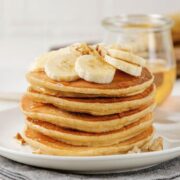
With lots of banana flavor and an out-of-this-world fluffy texture, these gluten-free banana pancakes are about to make your weekend breakfast epic!
Print
Pin
Ingredients
- 1 ½ cups all-purpose gluten-free flour
- 2 ½ teaspoons baking powder
- Pinch salt, omit if butter is salted
- 1 large ripe banana, about ¾ cup mashed
- 1 large egg
- 1 ½ cups milk, any
- 3 tablespoons butter, melted
- 2 teaspoons vanilla extract, optional
Instructions
Make the batter:
- In a small bowl, combine the gluten-free flour, baking powder, and salt. Set aside.
- In a large bowl, mash the banana with a fork. See the note below on under-ripe banana and an easy mashing method. To the banana bowl, add the egg, milk, melted butter, and vanilla extract. Break up the egg first with a fork, and then begin to mix it with the liquids in the bowl.
- Add the dry ingredients to the wet bowl and mix until the flour is incorporated and is no longer visible. Overmixing leads to chewy pancakes. Some of the visible lumps are the mashed banana.
- Wait 5 minutes before cooking so the gluten-free flour can absorb the liquid and set. Check the batter's consistency now (see the notes for troubleshooting). It's on the thicker side.
Cook the pancakes:
- Heat a non-stick griddle or large pan over medium heat. Once hot, grease, spray, or melt butter on the hot surface. When using an electric griddle, heat it somewhere between 300 and 350F. Immediately, pour ¼ cup of batter onto the greased surface per pancake.
- Cook the pancakes for about 2 minutes, until the edges are defined and bubbles form. Flip the pancakes over and cook for an additional 2 minutes. Avoid pressing down on the pancake after flipping; this will make it dense and chewy. If they're browning too fast and you flip them too early, they'll be undercooked. Reduce the heat and rinse the pan between batches if needed. Remove the pancakes from the pan onto a plate and keep them warm while you cook the rest.
- Serve them warm topped with your favorite toppings and syrups.
Store:
- Refrigerate cooked pancakes for up to 4 days. To freeze, lay them flat on a parchment-lined baking sheet, then transfer to a zip bag for up to 3 months. Reheat in the microwave (30–60 seconds) or in the toaster.
Notes
- To ripen your banana in a pinch, peel the banana and microwave it in 15-second intervals, mashing it with a fork as it softens. This will quick-ripen the banana and bring out its sweetness. Then, allow it to cool down completely before making the batter.
- 1 ½ teaspoons of cinnamon to the dry ingredients bowl.
- Chocolate chips: about ½ cup to the batter, folded gently after it's mixed.
- If you omit the butter (which adds moisture), your pancakes will be a little drier/crumblier, and you’ll need to add the same amount of liquid (3 tablespoons) to the bowl (a neutral oil also works).
- If your batter is too thick, you either added too much flour into the cup or your gf flour is a little dense. Add 2 more tablespoons of milk to thin it, then mix gently.
- If your batter is too runny, add 1 to 2 tablespoons more flour, mix gently, and wait 5 minutes before cooking.
Nutrition
Serving: 2 pancakes | Calories: 217kcal | Carbohydrates: 32g | Protein: 7g | Fat: 7g | Saturated Fat: 4g | Polyunsaturated Fat: 1g | Monounsaturated Fat: 2g | Trans Fat: 0.2g | Cholesterol: 44mg | Sodium: 214mg | Potassium: 220mg | Fiber: 1g | Sugar: 6g | Vitamin A: 353IU | Vitamin C: 2mg | Calcium: 190mg | Iron: 2mg
