
Delicious Baked Salmon from Frozen!
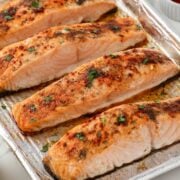
Follow this easy recipe to learn how to bake frozen salmon to perfection without thawing.
Print
Pin
Ingredients
- 4 frozen salmon fillets, with or without skin
- 2 teaspoons oil
- 1 teaspoon garlic powder
- 1 teaspoon paprika
- ½ teaspoon salt
- ½ teaspoon pepper
- 1 lemon, optional
Instructions
Prep:
- Preheat the oven to 425F with the top oven rack positioned in the middle of the oven. If you're baking skinless salmon, lightly grease the bottom of a baking dish with oil or spray.
- Remove the frozen salmon from the packaging and use a paper towel to pat it dry if necessary. If you left it on the counter for a bit and it's begun to thaw, you want to absorb that liquid.
Season the salmon:
- Place the salmon in the baking dish, skin-side down. If you have skinless salmon, the flat side goes at the bottom. Drizzle a little olive oil over the tops of the salmon and with a brush (or your fingertips) spread it over the top of each piece. This flavors the salmon and gives it a nice crust at the end. Sprinkle the seasonings over the top of the salmon pices.
- Cover the baking dish tightly with foil to trap the moisture while baking.
Bake:
- Bake the salmon covered for 15 minutes. Then, remove the foil cover and cook for another 8 to 10 minutes. Wild salmon and thinner salmon pieces should be done by now. Thicker salmon or farm-raised salmon will need a few extra minutes. You know the salmon is done when at the thickest part, the internal temperature taken with a meat thermometer registers 145F.
Serve:
- Remove the baking dish from the oven, squeeze the lemon over the tops of the salmon, and serve.
Notes
Nutrition
Serving: 1serving | Calories: 246kcal | Carbohydrates: 1g | Protein: 34g | Fat: 9g | Saturated Fat: 2g | Polyunsaturated Fat: 4g | Monounsaturated Fat: 4g | Cholesterol: 94mg | Sodium: 76mg | Potassium: 857mg | Fiber: 0.3g | Sugar: 0.1g | Vitamin A: 316IU | Vitamin C: 0.01mg | Calcium: 23mg | Iron: 2mg
