
Yeast Pancakes (Easy Recipe)
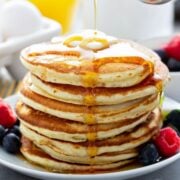
With an unbeatable old-school flavor and texture, these yeast pancakes will become your new weekend go-to recipe!
Print
Pin
Ingredients
- 2 cups all-purpose flour, divided
- 2 ¼ teaspoons active dry yeast*, 1 package (7g)
- 1 ¼ cups milk, any
- ¼ cup water
- 2 large eggs
- ¼ cup butter, melted
- 2 tablespoons sugar
- 1 teaspoon baking soda, optional but recommended
- ½ teaspoon salt
Instructions
Prep:
- Activating the yeast can be done overnight in the fridge or in the morning for 1 hour on the counter. You're only combining some of the flour to feed the yeast, make sure to plan accordingly.
- In a large batter bowl combine 1 cup of flour and the yeast. Heat the milk and water until warm (120F). If you don't have a thermometer, use your pinky finger to test it; it should feel warm, not hot. Add the warm liquid to the flour and yeast and with a rubber spatula, mix to combine.
Activate the yeast:
- Cover the mixture with a lid or plastic wrap. Refrigerate overnight, 8 hours minimum, or on the counter for 1 hour. It's ready when the mixture has approximately doubled in size and bubbles have formed.
Make the batter:
- If you made the yeast bowl the night before, take it out of the fridge and let it sit at room temperature for 10 to 15 minutes.
- In a medium bowl, whisk the eggs and add the melted butter. In another bowl, combine the other half of the flour, sugar, baking soda (if using), and salt.
- With a rubber spatula, give the yeast bowl a stir to mix it. Add the egg and butter mixture to the bowl and the other dry ingredients. Mix to combine until smooth. A few lumps are ok, use a fork to break up any flour clumps instead of overmixing.
Cook the pancakes:
- Heat a large non-stick pan or griddle to medium-high heat. Once hot, grease with oil or butter.
- Immediately, pour ¼ cup of pancake batter onto the hot surface. Cook the pancakes for 2 minutes on the first side, waiting to flip them over when bubbles have formed throughout and the edges look defined. Flip and cook for an additional minute on the other side. Keep the pancakes warm while you cook the remaining batter.
Serve and store:
- Serve the pancakes warm topped with your favorite syrups and toppings.
- Uncooked batter can be refrigerated for up to 2 days and brought to room temperature before cooking. Cooked leftover pancakes can be stored in the fridge for up to 4 days in an airtight container or zip bag or frozen for up to 3 months.
Notes
Quick Rise Yeast rising time on the counter is shorter. The yeast bowl mixture should double in size in about 30 minutes, vs. the full hour needed for traditional active yeast. This also depends on the room temperature. Overnight rising is not necessary with quick-rise yeast.
Nutrition
Serving: 2 pancakes | Calories: 200kcal | Carbohydrates: 27g | Protein: 5g | Fat: 8g | Saturated Fat: 4g | Polyunsaturated Fat: 1g | Monounsaturated Fat: 2g | Trans Fat: 0.2g | Cholesterol: 56mg | Sodium: 351mg | Potassium: 59mg | Fiber: 1g | Sugar: 3g | Vitamin A: 237IU | Vitamin C: 0.003mg | Calcium: 60mg | Iron: 2mg
