
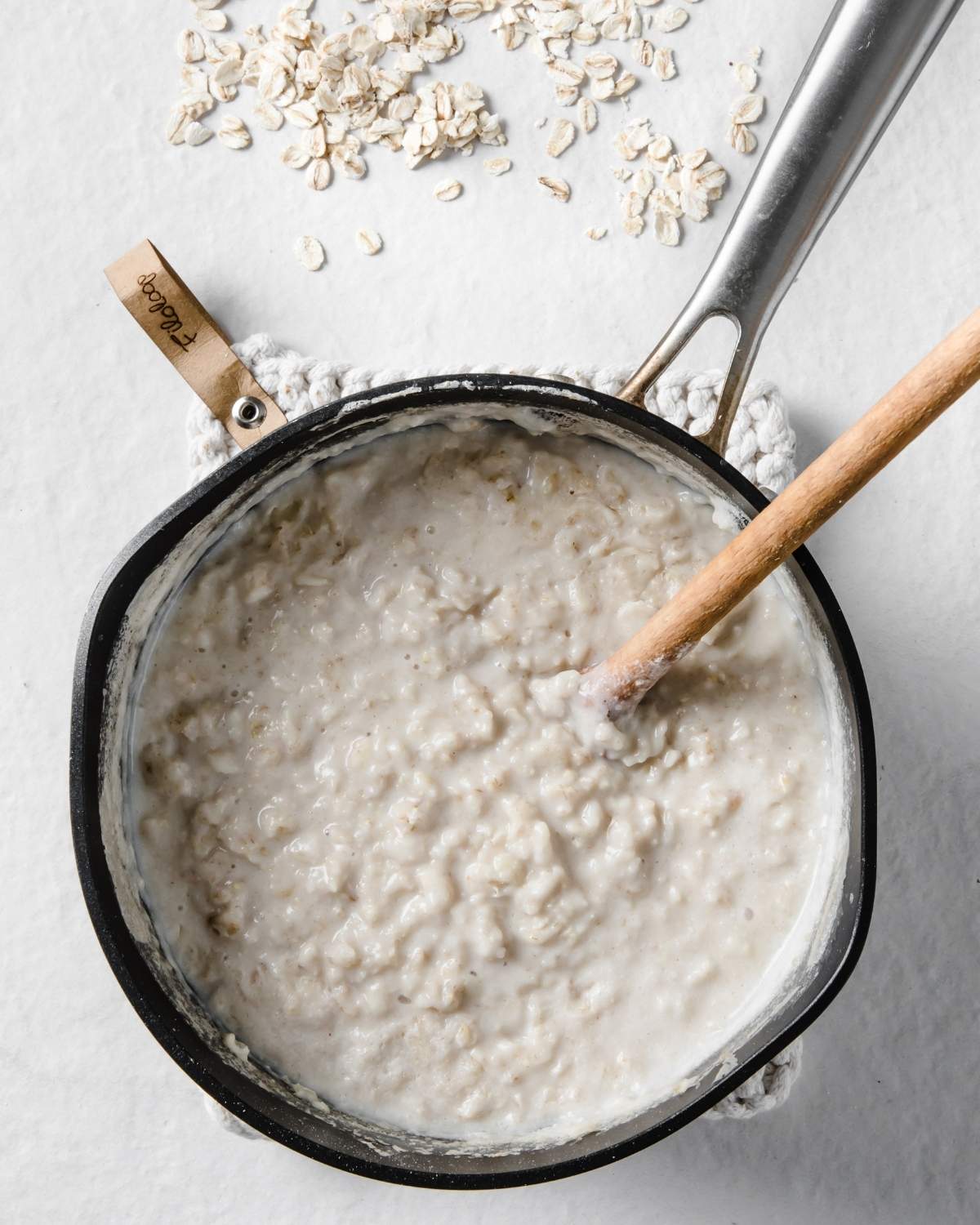
If you cooked oatmeal this morning only to be disappointed with a watery, unappetizing mush, you’ve come to the right place. In this post, I’m sharing ingredients and tips on how to thicken oatmeal and doctor it up into a heartier, better-tasting breakfast with great texture.
Jump to:
Is Oatmeal Supposed to Be Watery?
Oatmeal has a ton of health benefits, and you can enjoy it in so many ways: overnight oats, protein oats, and even savory oatmeal. And when cooked correctly, oatmeal should have a hearty, slightly chewy texture and creamy consistency. It should never be watery or ‘gluey’.
If the pot of oats you just made didn’t turn out, try adding one of the ingredients listed below to help absorb excess liquid, enhance the texture, and improve flavor, while adding extra nutrition.
1. Protein Powder
Protein powder can add up to 20 grams of protein and does a terrific job of absorbing excess liquid quickly. You’ll want to stir in the protein powder once the oatmeal is cooked and removed from the heat; otherwise, it will clump and give it a grainy texture. Learn more about the benefits of protein powder here and my top choices for recipes like this.
2. Coconut Flour
Coconut flour contains a lot of fiber, making it highly absorbent. To thicken your oatmeal, add a tablespoon of coconut flour per serving of oats and let it sit for a minute. Check back, and you’ll notice the improvement in consistency and increase in volume.
3. Egg Whites
Egg whites enhance oatmeal with a fluffier texture and up to 7 grams of protein (if using the recommended 2 egg whites per serving of oats).
To do this, remove the cooked oatmeal from the heat and add the whisked raw egg whites. Stir for 2 minutes or until combined. You should not see any specks of white. The oatmeal will be smooth, and the egg whites undetectable.
No worries, this is safe. The whites cook in the hot oatmeal without ‘scrambling’. You can also do this with egg whites from a carton, you’ll need about ⅓ cup.
4. Nut Butter
This one is a favorite of mine! Nut butter has a super thick texture, which carries over when you add it to oatmeal. You can use any of your favorite options, such as peanut butter, almond butter, or a nut butter alternative.
5. Flax Meal
Flax meal is a natural thickening agent made from ground flaxseeds. They are an excellent source of fiber, omega-3 fatty acids, and are sure to doctor up watery oats. Stir them into cooked oatmeal, let it rest a minute or 2, and check back- the oats should be more cohesive.
You can also use any of these ingredients, except egg whites (for texture reasons), to thicken oatmeal made in the microwave or with quick oats. Just stir them into the bowl, give it a minute or two, and check on the texture. You may need to microwave the oats for an additional minute.
How to Make Thick Oatmeal
If you haven’t started cooking yet and are looking for easy ways to thicken oatmeal, I’ve got more delicious ingredients you can add while cooking to increase volume and achieve the desired texture.
- Pumpkin puree
For less than 50 calories, ⅓ cup of pumpkin pureé will stretch the oats and give you another excuse to bring out the pumpkin pie spice. - Mashed banana
Another healthier way to add volume without excess calories. You only need about ½ a banana. Save the other half to slice and top the oats. While you are at it, add a dash of cinnamon and brown sugar. - Choose your oats
Use steel-cut or old-fashioned oats. Quick oats tend to be mushier. I go with old-fashioned oats for most mornings, which turn out super creamy. Steel-cut oats are the best option for heartier oatmeal, but they take longer to cook.


Heather Beattie says
Thankyou for this information. I love oats but I never knew how to cook them properly. With the price of food going sky high and the cost of energy rising, it’s good we’ve got oats to use to sustain us. It’s quick to cook in comparison to meats and other root vegetables It can be used with many fruits for a luscious breakfast but I’m thinking how many other types of food I’ve never tried before with it.
Laura Fuentes says
Great point! I also eat oats for dinner (not just for breakfast) and although I cook them regularly… sometimes my measurements are off (usually I get distracted while I am preparing them) and I have to thicken oatmeal after the fact too!