
This post includes everything I've tested since 2014 to help you make truly great fluffy cassava flour pancakes, including a step-by-step video so yours turn out perfectly.

Pancakes with Cassava Flour
Pancakes are the one food my family can't live without, so when I removed grains from my diet for more than five years back in 2012, I was determined to create a version that could compete with my best pancake recipe.
These cassava flour pancakes are the ones we kept coming back to because everyone ate them without hesitation. Over the years, I've updated this post as I’ve tested many cassava flours, added a troubleshooting section, and included a video so yours turn out as great as ours.
While cassava flour yields similar results to recipes that use wheat-derived flour, it isn’t one you can substitute 1:1 in recipes.
Ingredients
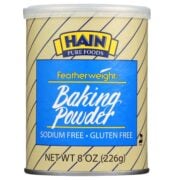
This recipe uses cassava flour as the base (see the brands I recommend for best results). Baking powder (regular or paleo) makes the pancakes fluffy, a pinch of salt enhances flavor, and a little sugar is optional for added sweetness. Milk (dairy or not) is the main liquid; eggs bind the batter (see my notes for subs), and butter, oil, or coconut oil add moisture. A little of vanilla boosts the flavor.
Which Brand of Cassava Flour to Use for Pancakes
After hundreds of tests (and plenty of reader feedback), I can confidently say not all cassava flours work for pancakes. Lower-quality or white-labeled brands often lead to gummy or flat results. For consistent, fluffy pancakes, I recommend using Bob's Red Mill Cassava Flour or Otto's Cassava Flour; both deliver the right texture every time. If you're having trouble with this recipe, the flour brand is likely the reason
Reader tip:
If you’re not using the brands listed above, add the liquid, then WAIT 2x as long (20 minutes), for the cassava to absorb it before troubleshooting the batter.
How to Make Pancakes with Cassava Flour
You'll find detailed instructions in the recipe card and a quick video. Here is what you need to know from the main steps:
- Measure and mix the dry ingredients.
Spoon flour into dry measuring cups (not liquid cups) and level it off. This is important because cassava flour can pack into the cup easily, and then you’ll have too much. - Mix the wet ingredients into the dry.
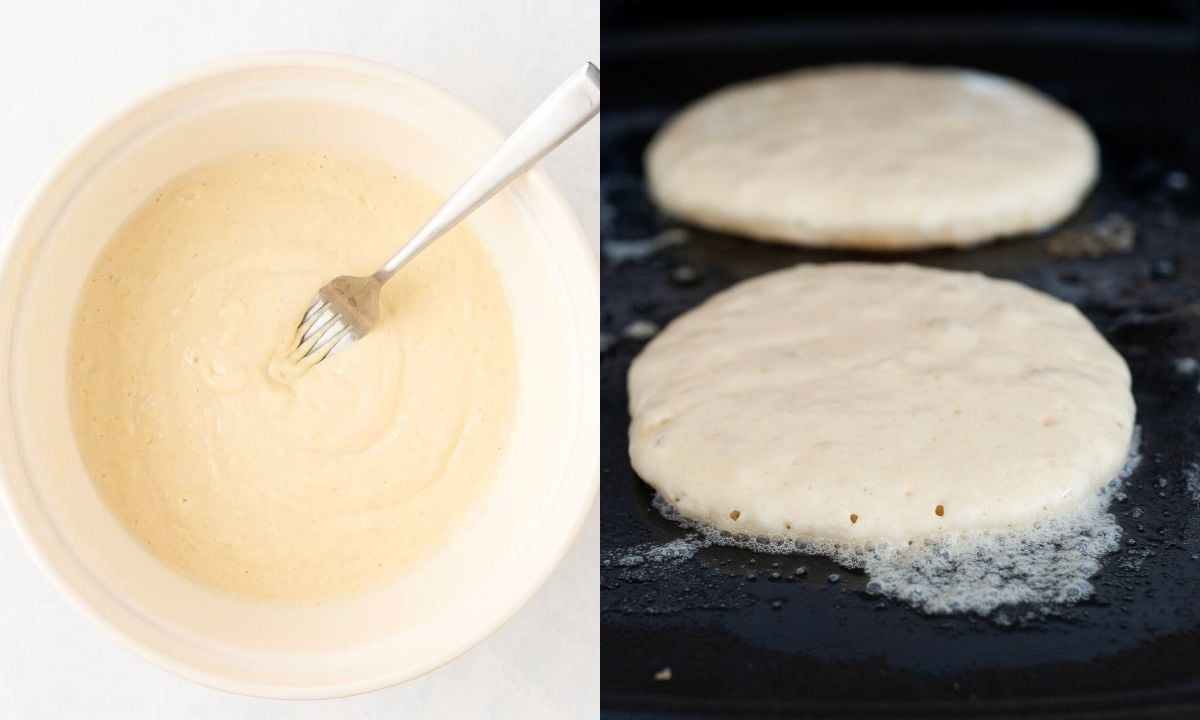
Make a well in the center by pushing the flour to the sides of the bowl, then add the liquid ingredients. Use a fork to whisk the eggs first, then mix in the wet ingredients, and gently stir the batter until the flour is no longer visible. Overmixing leads to chewy pancakes. - Let the batter rest for 10 minutes.
Cassava flour absorbs liquid slowly. Skipping this step will lead to a lot of frustration. The batter should be thick before cooking. - Cook the pancakes.
Use a greased nonstick pan over medium heat. Cook one pancake first to check the texture and adjust the batter if needed (see recipe notes). Each pancake takes about 2 minutes per side. Flip them only once to avoid dense pancakes. - Serve warm.
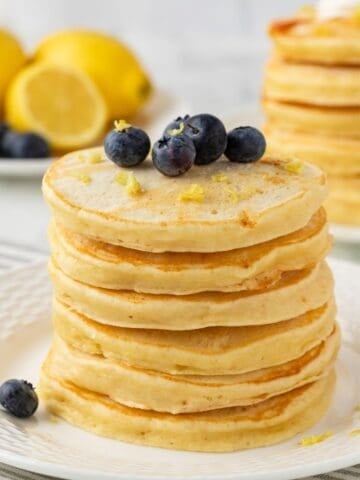
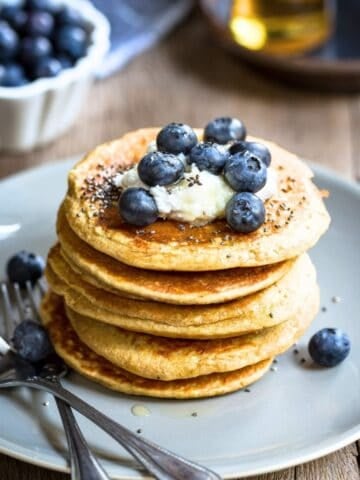
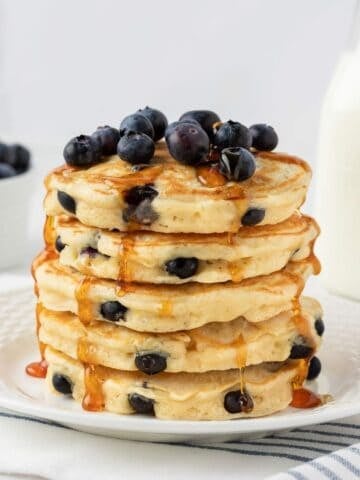
Topped with fruit, toppings, pancake syrup, blueberry syrup, or this epic strawberry syrup.
Success Tips
Check your baking powder; if your pancakes aren't fluffy, it might have expired. This happens when it's been open for more than 9 months.
Your batter is too thick or too thin.
If, after resting, your batter is runny, add in 1 to 2 tablespoons of additional cassava flour and let it sit for a few more minutes before cooking. If it’s too thick, add a little more liquid (1-2 TB) and mix gently. This happens with some brands due to quality issues.
If your middles are wet (undercooked).
This usually means the heat was too low (or too high and flipped too soon). Aim for medium heat and wait until bubbles form and the edges look set before flipping.
Your pancakes are browning quickly.
Your heat is too high; lower it, and rinse the pan under cold water between batches. If greasing with butter, make sure it doesn't brown before adding the batter.
Prep-Ahead & Storage
Store leftover pancakes in the fridge for up to 3 days or freeze them for up to 3 months. Reheat in the microwave, toaster, or toaster oven until warm.
Fluffy Cassava Flour Pancakes
Watch how it’s made:
Ingredients
- 1 ½ cups cassava flour
- 2 tablespoons sugar, optional
- 1 tablespoon baking powder
- pinch salt
- 1 ¾ cups milk
- 2 eggs
- 2 tablespoons melted butter, or oil
- 2 teaspoons vanilla extract
Instructions
Make the batter:
- Measure the flour into a bowl by spooning it into dry measuring cups (not liquid cups) and level it off. This is important because cassava flour can pack into the cup easily, and then you'll have too much. Then, add the sugar (if using), baking powder, and salt.
- Move the flour to the sides and make a well in the middle. Add the milk, eggs, melted butter (or oil), and vanilla. With a fork, whisk the eggs first into the milk, then incorporate the wet ingredients into the dry to make a smooth batter. Stop mixing when there's no visible flour left.
Rest:
- Let it sit on the counter for 10 minutes to absorb the moisture. If you're not using one of the two brands recommended, you might have to wait longer. Cassava flour absorbs liquid very slowly. Once it's thickened up, cook the pancakes or follow the notes below to troubleshoot.
Cook the pancakes:
- Heat a large pan or griddle over medium heat, and once hot, grease it. Immediately pour ¼ cup of batter for each pancake, cook for 2 minutes on the first side, and once the edges are defined and bubbles have formed throughout, flip them over and cook them for 1 to 2 more minutes on the other side. Repeat the process with the remaining pancake batter.
Serve & storage:
- Stack them high, add butter, syrup, and your favorite pancake toppings. Refrigerate leftover pancakes for up to 3 days or freeze them for up to 3 months. Reheat them in the microwave for 30-45 seconds each, or toast them.
Notes
- Eggless Option: this recipe works best with eggs, but you can substitute with 2 flax eggs (2 tablespoons ground flax + 6 tablespoons warm water, let gel before using) or a commercial egg replacer for 2 eggs. Mix the prepared substitute with the milk before adding to the dry ingredients.
- Dairy-Free: use dairy-free milk. If using canned coconut milk, it’s much thicker so I recommend thinning it out with a little water.
- Flat pancakes: If your pancakes aren't fluffy, your baking powder may be expired, especially if it's been open over 9 months.
- If the batter is too thin after resting, gently whisk in 1-2 tablespoons of cassava flour and let it sit for a few more minutes. Some brands absorb liquid more slowly or have a lower starch content.
- If the batter is too thick, add 1-2 tablespoons of additional liquid and mix it gently.
- 1 teaspoon of cinnamon or pumpkin spice can be mixed with the dry ingredients.
- 1 cup of diced fruit, ½ cup mashed banana, or ½ cup of chocolate chips can be folded into the batter gently right before cooking.
The recommendations below may include affiliate links.




Melissa says
After sitting mine batter was a lot thicker. I used coconut milk and flax meal eggs. Do I need to change the recipe slightly because of that?
Laura Fuentes says
While the batter for this recipe is thick, coconut milk is thicker than dairy milk and traditional commercial dairy-free milks. I would add 1 tablespoon or two additional to thin out the batter to look like the one shown in the video.
Donna Nichols says
Could this same batter be used to make waffles?
Laura Fuentes says
To turn these into waffles, I add a little more liquid to the batter (about 2 tablespoons) or for light and crisper waffles, I add more oil (or melted butter), about 2 tablespoons.
Melody says
I made waffles with this. I put 1 tsp if vanilla in it and made them in the chaffle waffle maker they were great!
Denton says
These were delicious. I added some cinnamon to my batter. Thanks for the recipe. 😀
Laura Fuentes says
Cinnamon sounds like a great idea!
Diana says
This is THE pancake recipe to use. I’ve gone through so many different recipes and finally found one that my whole family will eat. I did use just a little less liquid because to accommodate the flour I used and they came out perfect. Watching the video helped to see the right consistency of the batter. Thanks so much for sharing.
Monika says
Thank you for this recipe. I enjoyed the experience and flavour. I watched the video, tried it with a recommended flour (Otto’s), did sift, and allowed it to rest (I see that it thickens up a fair bit during the rest, mine was as in your video; I can see how some would describe that as paste/thick 🙂 ). I had added 1 tsp cinnamon and 1 tsp vanilla extract, and used a vanilla almond milk (so that’s also somewhat sweetened) and ghee, with rather large (since duck) eggs, [so I could try with smaller eggs as step #1 to try correcting, but am not convinced this is the issue]. I tried cooking some as is, and some with added dried blueberries.
My challenge (in all) was in getting these to be cooked rather than gooey or not entirely cooked through in the centre, and in getting them to be as fluffy as yours seem (with the ‘double-pouf’ in the photos). How long do you tend to cook these on the first side if it’s only a minute on the second side? Also, do you maintain exclusively medium heat for the full duration on your burner? Do you have any suggestions to get them to be more cooked in the centre and more ‘fluffy’? Thanks in advance!
Laura Fuentes says
Hi, I’m glad this worked well for you. I understand the challenge of getting some of the centers cooked through; this has happened to me several times when the heat source was too hot at first (heating up the base too quickly so it leads to earlier flips) and then turning down the heat. Another most immediate remedy is to spread the batter out with the back of a spoon to make a thinner center (just like pressing down on a hamburger to cook the middles evenly). I hope this helps!