
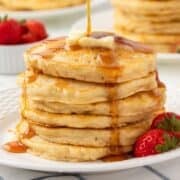
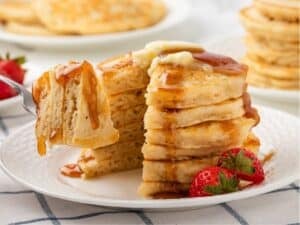
One million readers (plus, my kids) can't be wrong about this gluten-free pancake recipe. It proves once and for all that you don't have to give up great pancakes when you go gluten-free. These are pillowy soft, lightly sweet, and their fluffy texture soak up just the right amount of syrup in every bite.
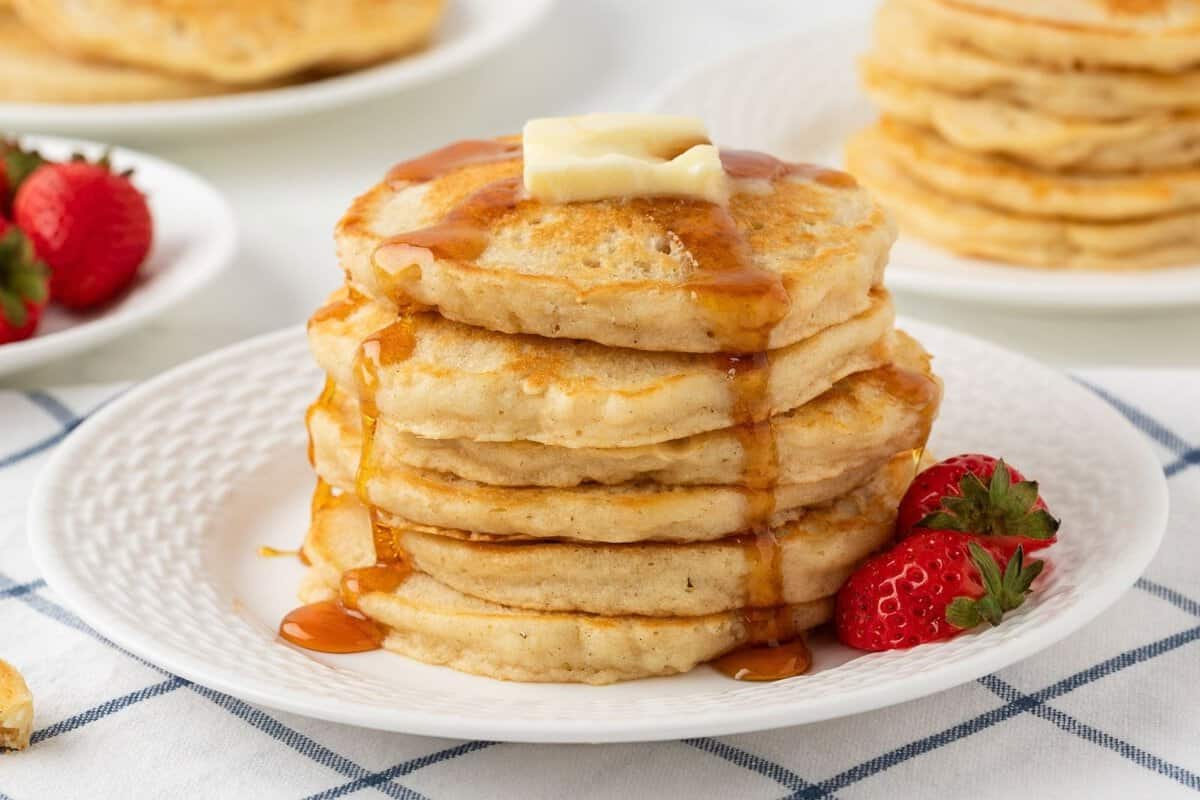
I’ve Been Perfecting These Gluten-Free Pancakes for More Than a Decade
I first developed this recipe in 2010 when my son had to go gluten-free. He was my toughest critic because I wanted to make pancakes that were just as soft and fluffy as my traditional pancake recipes. I wasn’t about to let gluten-free mean settling for less!
This was the first of many gluten-free pancake recipes I’ve published, and over the years, I’ve continued testing it with different gluten-free flours. I’ve learned that not all blends give you the same results, so I’m sharing the ones that consistently work best. There’s also a short video where you can watch me make them so yours turn out great, too.
Which Gluten-Free Flour is Best for Pancakes
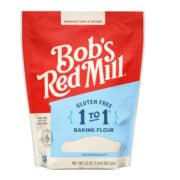
After many tests, I continue to stand by Bob's Red Mill 1:1 Gluten Free Baking Flour and King Arthur's Measure for Measure Gluten-Free Flour. Both yield consistent, fluffy gluten-free pancakes with this recipe.
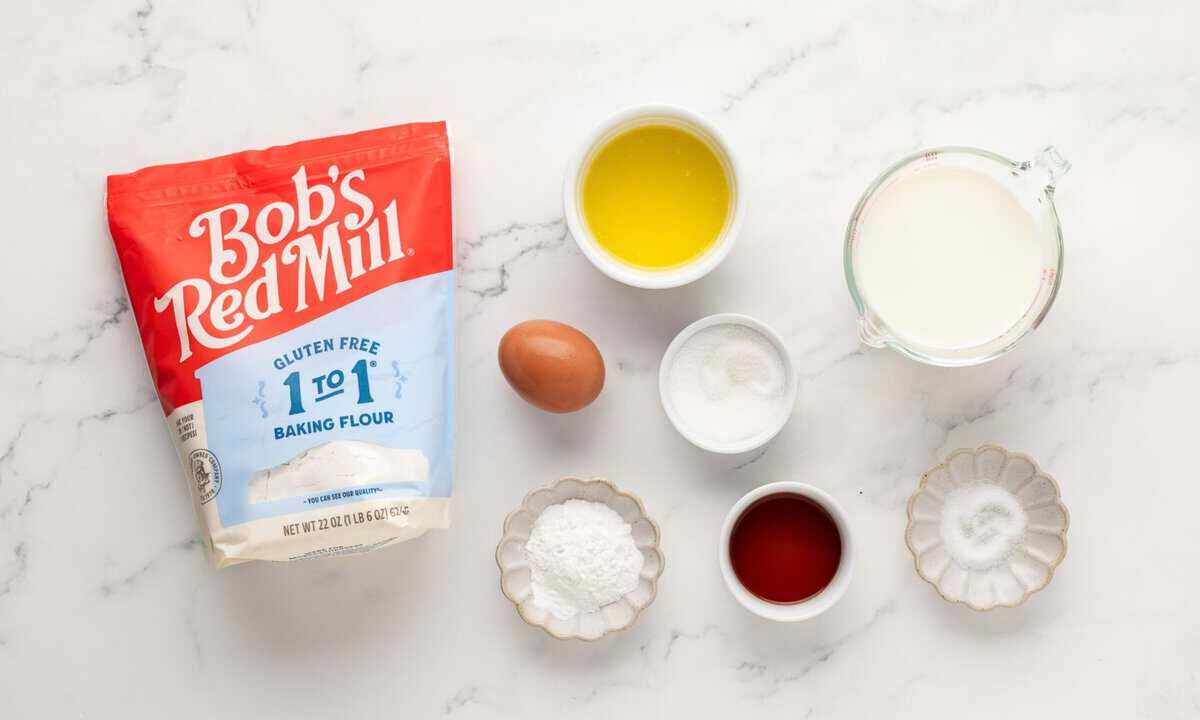
What You Need to Know About Making Gluten-Free Pancakes
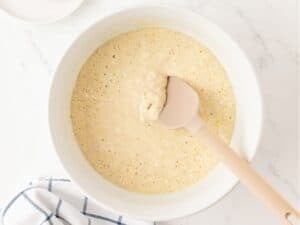
The most important step when making gluten-free pancakes is letting the batter rest for 5 minutes before cooking. Unlike regular flour, gluten-free flour blends need a little extra time to absorb the liquid. This helps the batter thicken so the pancakes cook up soft and fluffy instead of thin or gummy. After resting, check the consistency and add a splash of milk if the batter is too thick.
Make Your Own Gluten-Free Pancake Mix
Save time by mixing the dry ingredients in a zip bag. This will yield a 4-serving batch. Label it with the wet ingredients needed on the recipe card, and you’ll have a single-batch mix ready to go. For larger batches, follow my gluten-free pancake mix recipe.
Single-ingredient “flours” that are also considered gluten-free can’t be used with this recipe. Try them with one of these specifically developed with that flour in mind:
Oatmeal Pancakes
Cassava Flour Pancakes
Almond Flour Pancakes
Coconut Flour Pancakes
Flourless Protein Pancakes
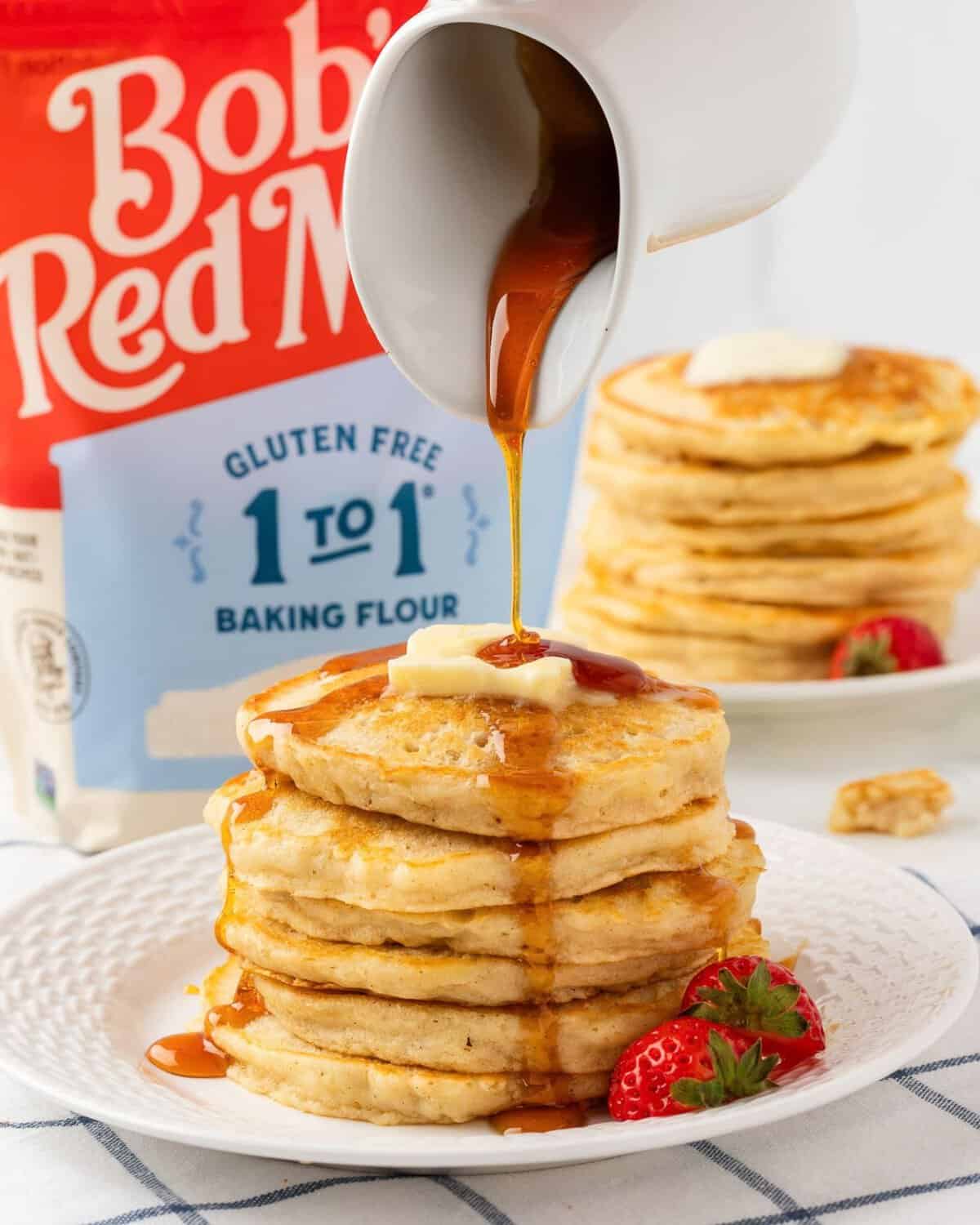
More Gluten-Free Pancakes
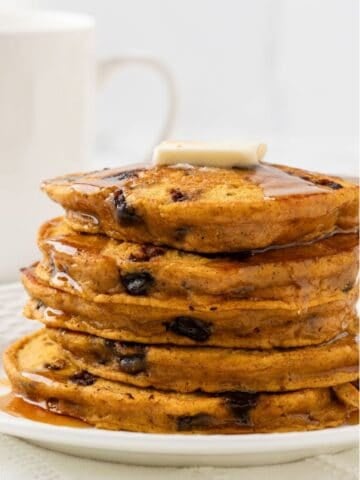
Try this recipe first and come back for my blueberry gluten-free pancakes, my gluten-free banana pancakes, and my gluten-free pumpkin pancakes.
Best Gluten-Free Pancakes
Watch how it’s made:
Ingredients
- 1 ¼ cups gluten-free 1:1 baking flour, see note*
- 2 tablespoons sugar
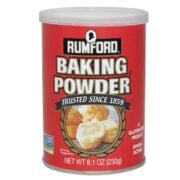
- 3 teaspoons baking powder, aluminum-free
- ¼ teaspoon salt
- 1 ¼ cups milk, any
- 1 egg
- 3 tablespoons melted butter*
- 2 teaspoons vanilla
Instructions
Make the batter
- In a large bowl, combine the flour, sugar, baking powder, and salt. Omit the salt if your butter is salted. Use measuring cups for flour, not one for liquids (with a spout) and fill each cup by filling it with another scoop, then remove excess from the top to avoid overpacking (adding too much).
- Make a well in the middle and pour in the milk, egg, slightly cooled melted butter, and vanilla. Use a fork to break up the egg first, then slowly mix it with the liquid ingredients. Then, combine with the dry ingredients, mixing from the outside of the bowl in. Stop mixing when there's no visible flour left.

Wait 5 minutes
- Wait for the gluten-free flour to absorb the liquid and set. Check the batter's consistency now. This batter is on the thicker side. Read the notes below if your batter seems off or doesn't look like mine in the video.
Cook the pancakes
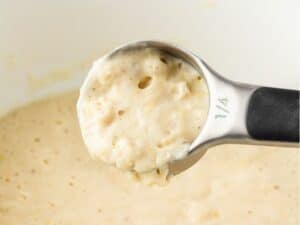
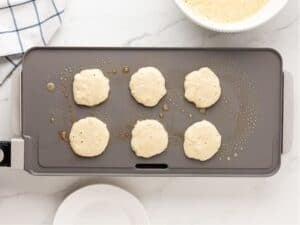
- Heat a griddle or a large non-stick pan over medium heat. Once hot, grease the griddle or pan with butter or oil. Immediately, pour or scoop ¼ cup of batter for each pancake.
- Cook them for about 2 minutes, waiting until bubbles form and edges are defined before flipping them over. Cook the other side for about 2 more minutes (a little less). Transfer them to a plate and repeat the process with the remaining pancake batter. If the pancakes are cooking too much on the outside but the middles are undercooked, reduce the heat. They're being flipped too early and don't have enough time to cook.
Serve & store
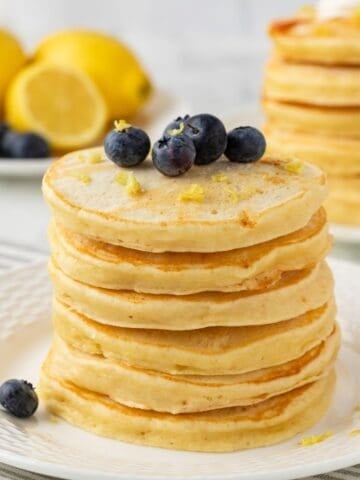
- Stack them high, add butter, syrup, and your favorite pancake toppings.
- Refrigerate leftover pancakes for up to 3 days or freeze them by placing them on a parchment-lined baking sheet for an hour, then transfer them to a zip bag, and keep frozen for up to 3 months. Reheat the pancakes in the microwave for 30-45 seconds each, or toast them.
Notes
- Add up to 1 cup of fruit, cut small, like diced strawberries or blueberries (whole), to the batter (after it’s been mixed) by gently folding them in with a spatula.
- Chocolate chips: about ½ cup to the batter, folded gently.
- If you omit the butter (which adds moisture), your pancakes will be a little more dry/crumbly and you’ll need to add the same amount of liquid (3 tablespoons) to the bowl (a neutral oil also works).
- If your batter is too thick, you either added too much flour into the cup or your gf flour is a little dense. Add 2 more tablespoons of milk to thin it, then mix gently.
- If your batter is too runny, add 1 to 2 tablespoons more flour, mix gently, and wait 5 minutes before cooking.
- If your pancakes are flat, your baking powder is no longer active (gone bad). This ingredient cannot be omitted or swapped for baking soda.
The recommendations below may include affiliate links.

Denise says
They were dense and didn’t bubble up like regular pancakes.
Laura Fuentes says
I’m sorry these were dense for you. Were any substitutions or swaps made? In the recipe (and video) I epxlain and show you the texture of the batter and how to adjust it depending on the type of gluten-free flour you used.