
This recipe yields great allergy-friendly pancakes without expensive mixes. Here, you’ll find all my tested tips for the best rice flour pancake texture.
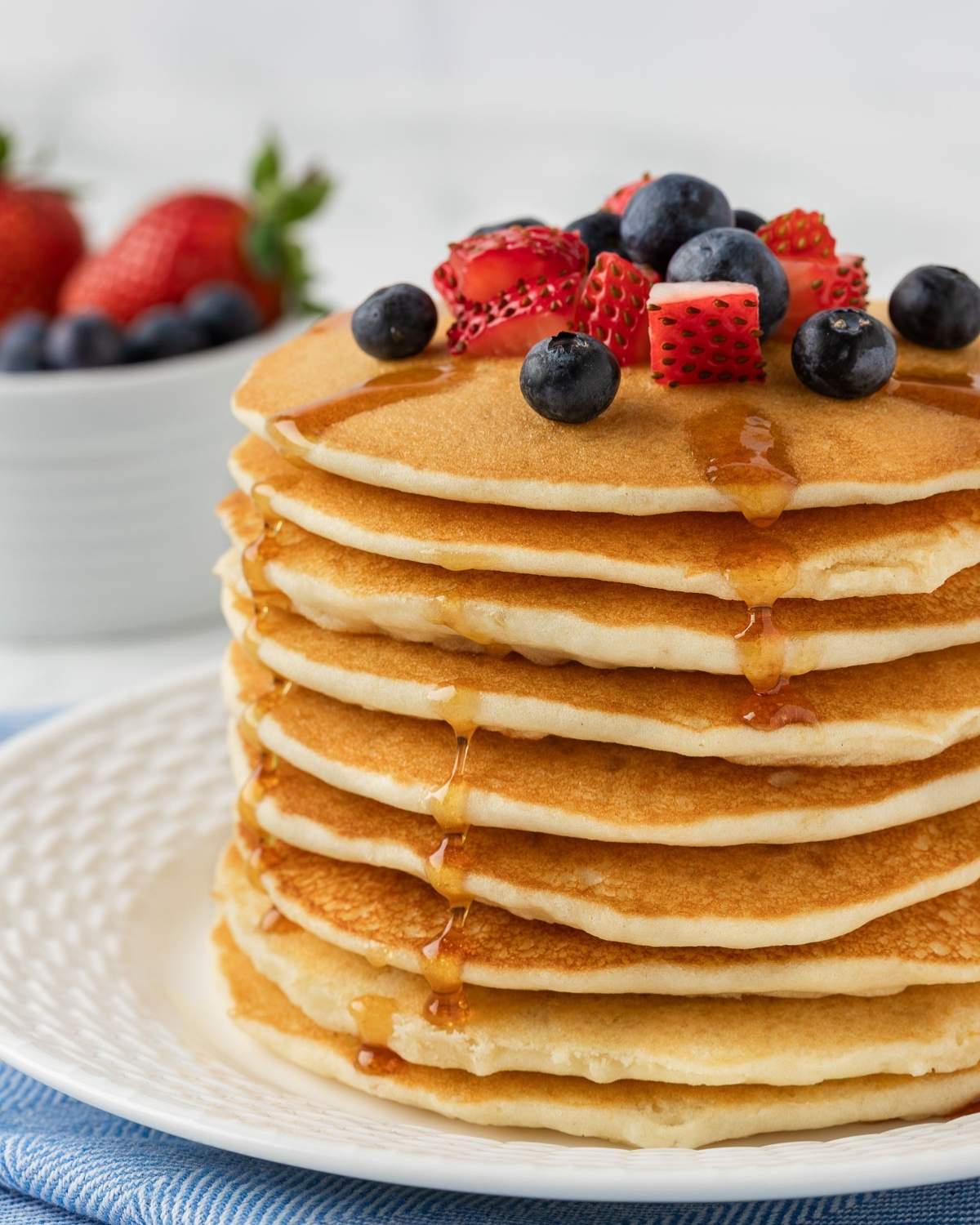
Fluffy Pancakes with Rice Flour
Back in 2010, when my son had digestive issues, the doctor recommended rice flour because it was gentler on his stomach, so I created this recipe and my gluten-free pancakes out of necessity, since the internet had no resources at the time. I needed the rice flour pancakes to be fluffy, stack well, and taste just as great as my best pancake recipe. I’m happy to report that this recipe is kid-approved and has withstood the test of time!
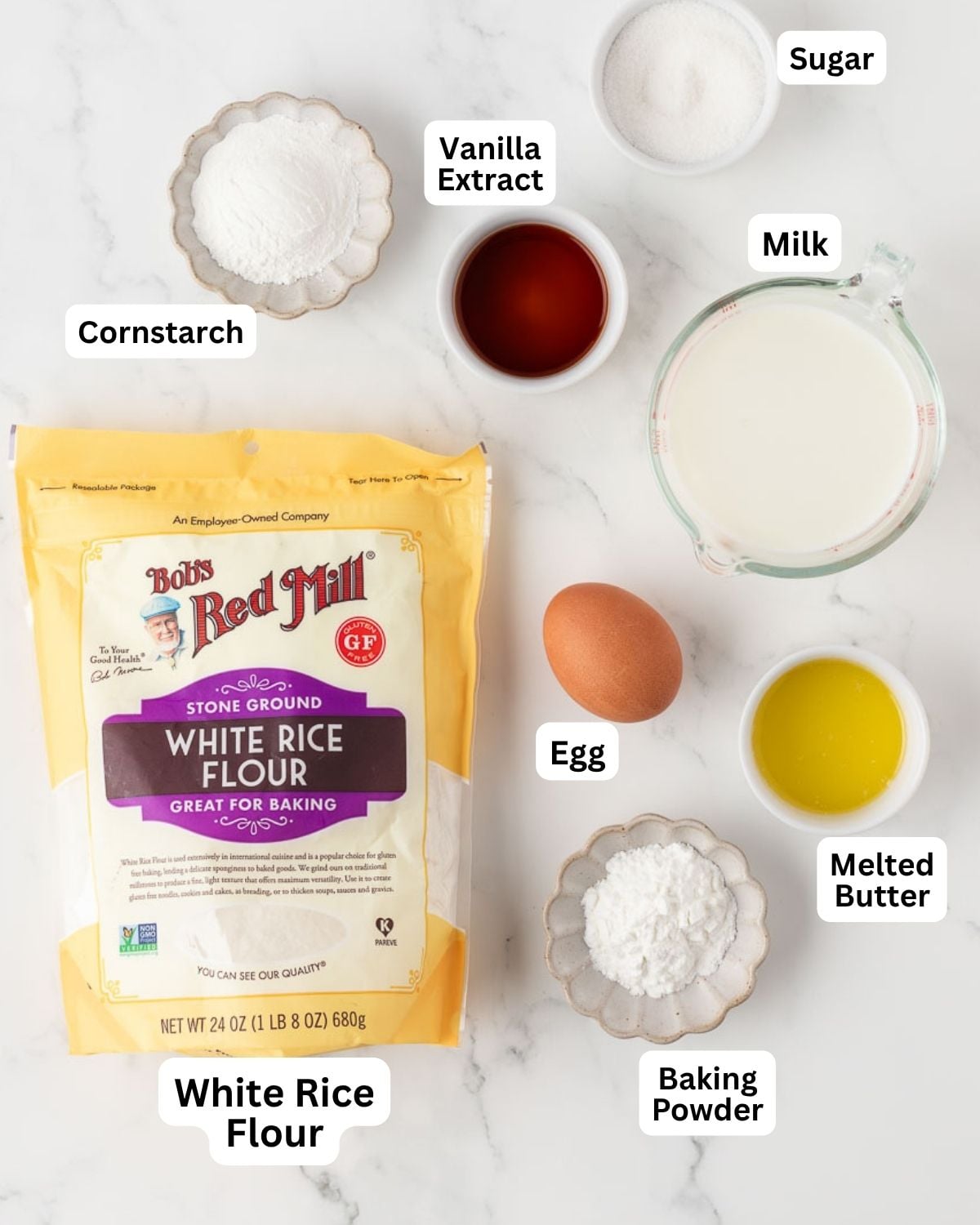
Ingredients
Before you make any swaps, here are a few notes on why each ingredient plays the part and any substitutes I’ve already tested.
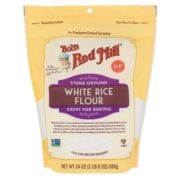
- Rice flour: white rice flour yields softer pancakes (less dense) than brown rice flour. More on why you should not use glutinous rice flour in the faq’s below.
- Sugar: just enough to sweeten the batter since rice flour tends to be very bland.
- Cornstarch: a little to give these pancakes a soft texture. You can use potato starch or tapioca starch.
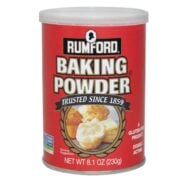
- Baking powder: helps the batter rise and gives the pancakes a light texture. You’ll get flat discs without it.
- Milk: dairy or non-dairy work. Do not use water.
- Egg: to bind the batter ingredients. This recipe will not work without it or using a substitute.
- Butter: or a neutral oil for moisture and flavor.
- Vanilla: to add a touch of sweetness and flavor.
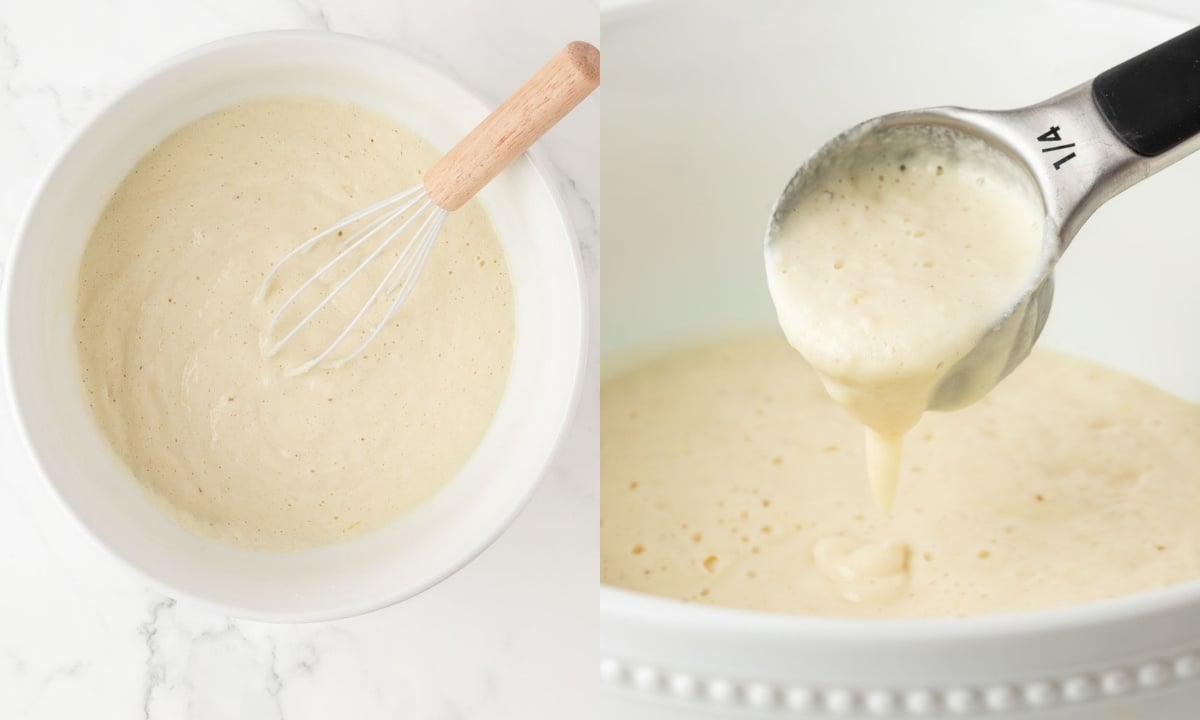
Rice Flour Pancake Batter
After mixing, the batter is quite runny and should not be cooked right away. The batter needs to sit on the counter for 10 minutes so the rice flour has time to absorb the liquid and thicken the batter. This step is crucial.
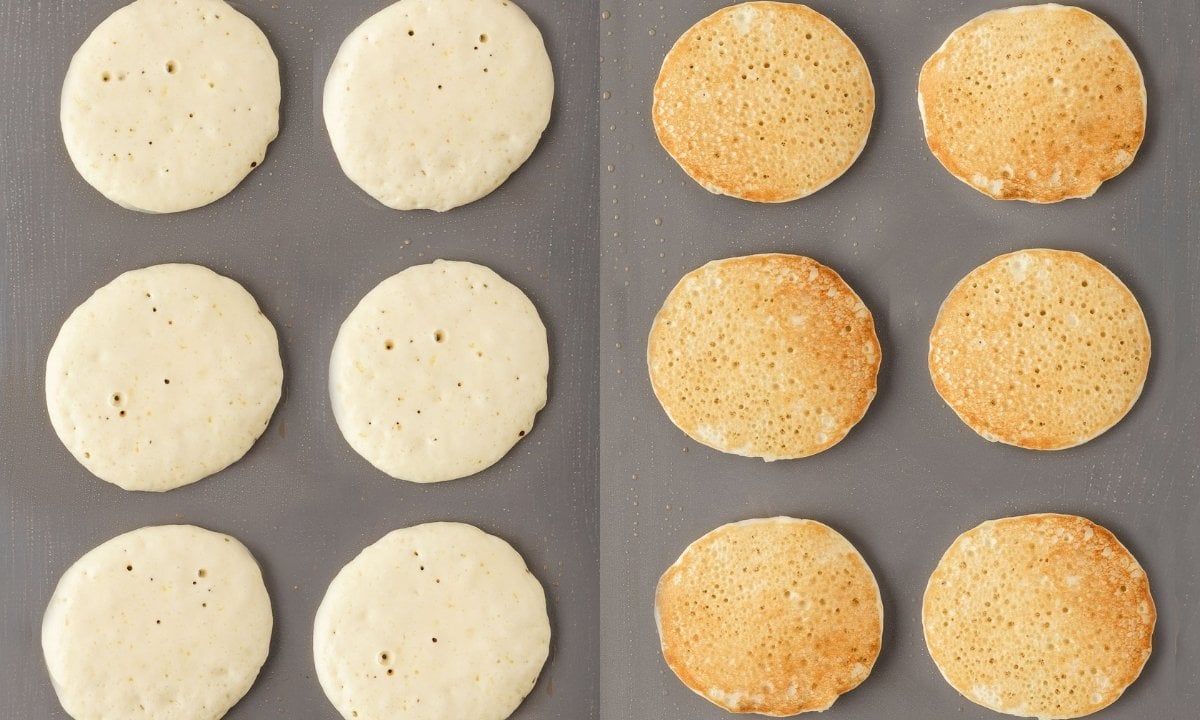
Rice Flour Pancake Texture
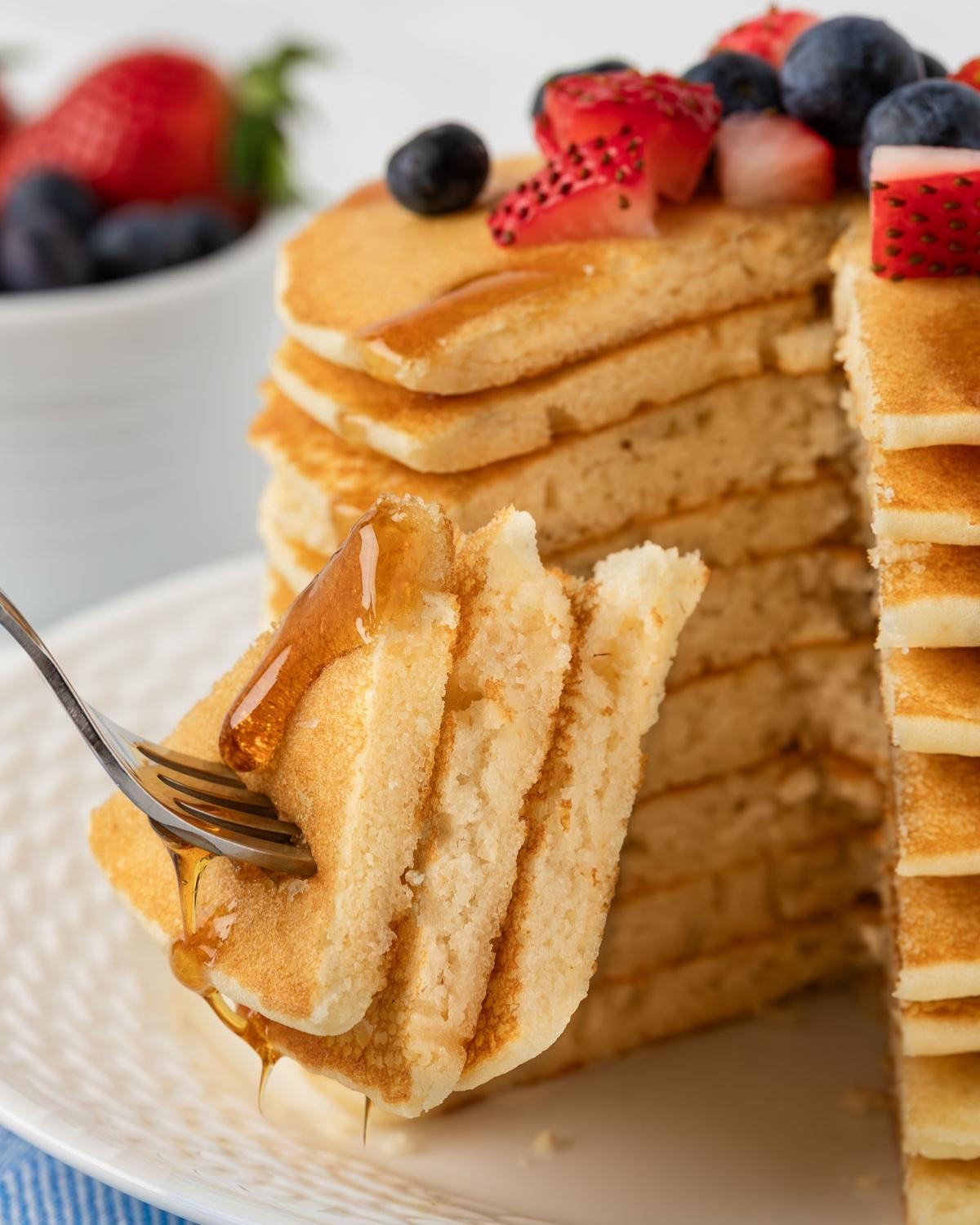
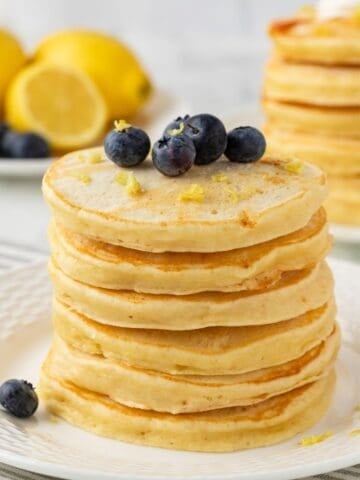
Rice flour pancakes are naturally a little thinner and softer than traditional pancakes. This recipe uses cornstarch to help give them a fluffier texture and better structure, while also balancing the slight graininess rice flour can sometimes have.
How to Make Rice Flour Pancakes
- Make the batter.
First, combine the dry ingredients in a large bowl. Then, add the wet ingredients, and use a fork to break up the eggs first, then mix the batter. - Wait 10 Minutes.
A crucial step so the batter thickens and the pancakes don’t fall apart. - Cook the pancakes.
Cook over medium heat on a greased, non-stick surface for about 2 minutes per side and wait for bubbles to form before flipping them over. - Stack them up.
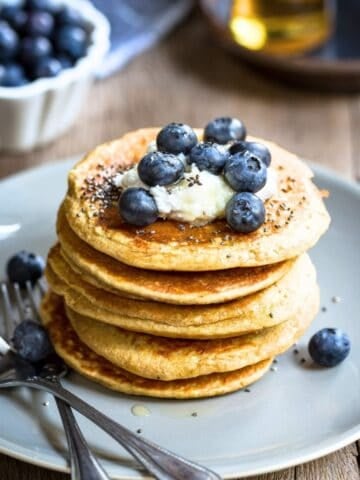
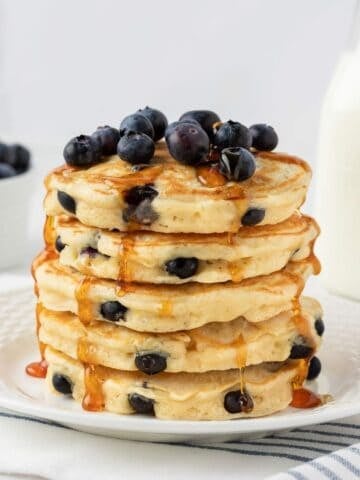
These top well with diced fruit and syrup, or with a drizzle of blueberry syrup, strawberry syrup for pancakes.
Laura’s Tips for Perfect Rice Flour Pancakes
No. Sweet rice flour, also labeled as glutinous rice flour, and regular rice flour behave very differently in pancake batter. Regular rice flour makes pancakes that are soft and cake-like, while sweet/glutinous rice flour is creates a sticky, chewy texture that turns gummy and doughy instead of fluffy and is best used for mochi.
No. Mochi flour is sweet rice flour (glutinous) and cannot be used for pancakes. See above.
You can use brown rice flour in the same amounts for this pancake recipe. The results are just as good, and the texture is a bit heartier, similar to whole wheat pancakes.
You can add ⅓ cup finely diced strawberries (chopped very small), ⅓ cup chocolate chips, or 1 teaspoon ground cinnamon.
Rice Flour Pancakes with Great Texture
Ingredients
- 1 cup rice flour, white
- 1 ½ tablespoons cornstarch,
- 2 tablespoons sugar
- 3 teaspoons baking powder, aluminum free
- 1 cup milk, any
- 1 egg, beaten
- 1 tablespoon butter or neutral oil, melted and cooled
- 1 teaspoon vanilla extract
Instructions
Make the batter
- In a large bowl, combine the rice flour, cornstarch, sugar, and baking powder. Use a whisk to distribute the ingredients well.
- Make a well in the middle of the bowl by moving the dry ingredients to the side, and add the milk, egg, butter, and vanilla. Use a fork to mix the egg with the liquid ingredients first, then gently whisk to combine the dry ingredients to make a smooth batter.
Let the batter rest
- Set the bowl aside and let the batter sit on the counter for 10 minutes. This allows the rice-flour batter to absorb the liquid and thicken, making this an essential step for the pancakes to have a thicker/fluffier texture and not fall apart while cooking.
Cook the pancakes
- Heat a non-stick pan or griddle on medium heat. Once hot, grease the surface with oil or butter and pour about 3 tablespoons of batter per pancake onto the hot pan. I use a ¼ cup scoop filled about ¾ of the way.
- Cook the first side for approximately 2 minutes, and once the edges are defined, and the middles begin to bubble, flip and cook for an additional minute on the other side. Repeat the process with the remaining batter to yield about 12 pancakes.
Serve & storage
- Serve with your favorite toppings and syrup. Leftover pancakes can be stored in an airtight container in the fridge for up to 4 days or frozen for up to 3 months. Reheat them in the microwave for 30 seconds or in a toaster.
Notes
The recommendations below may include affiliate links.

Amber Myers says
Yum, these look like some delicious pancakes. I’ll keep the recipe in mind for breakfast one morning.
Beth says
I was so pleasantly surprised by these pancakes! I thoughty they looked good, but I wasn’t sure how the texture would be. I made them for my gluten-free son, and they were absolutely fantastic.
Carol Cassara says
How timely this is. I’m on an elimination diet that means gluten free for testing purposes. I do feel a bit deprived, but these look great and I’m going to try them.
Kathy says
These were light and airy, and tasted amazing, even using the rice flour. I’m hooked!
Lydia says
It was not easy to find a recipe for rice pancakes that actually works. This one is perfect, thank you.