
This post may contain affiliate links. Read our disclosure policy here.
Looking for a sugar cookie recipe without baking powder you can cut out into your favorite shapes and decorate? You’re going to love how easy this recipe is to make.
This cookie has some nuances and differences, all of which I explain in the post below.

Can You Make Sugar Cookies Without Baking Powder or Soda?
Although most recipes for sugar cookies include baking powder and baking soda, one or both, you can make them without!
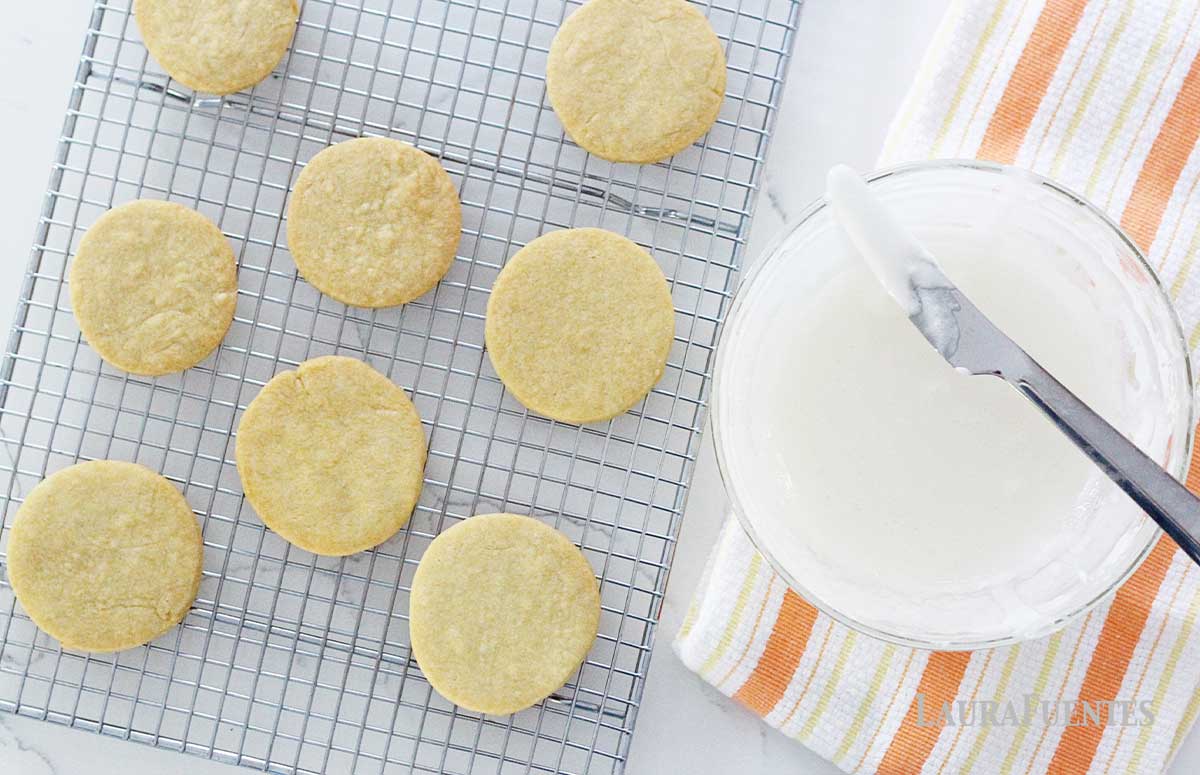
With this recipe, you’ll be able to roll the dough and use your favorite cut-out shapes, and once they cool completely, you’ll be able to frost them too.
The baked results of these cookies are crisper than the traditional sugar cookie since there are no rising or leavening agents to make them fluffy or spread the cookies.
Preventing Flat Sugar Cookies
These cookies don’t spread or rise, so the secret to preventing “flat” cookies is chilling the dough so the butter has had a chance to come back to a solid state in the dough.
You’ll also want to roll out the dough evenly so all the cookies have the same thickness before baking. Ultra-thin cookies are also thought of as flat.
This means that the rolled-out cookie dough’s thickness will be the cookie’s end result. Using these rolling pin thickness rings to roll your dough to an even thickness is the secret to even baking and texture throughout your batch.
Ingredients
Let’s take a look at the ingredients and the part they play in creating a delicious, chewy cookie. You’ll find the ingredient amounts and thorough cooking instructions in the recipe card at the very end of this post.
- Butter: start with softened butter that’s been sitting at room temperature. Do not melt it.
- White sugar: it sweetens the dough and makes the exteriors crisp. Some people use brown sugar for a softer cookie.
- Egg: adds structure to the dough and helps cookies rise without spreading out.
- Vanilla extract: can be swapped for almond or peppermint extract.
- All-purpose flour: is THE flour for cookies; the only alternative is a 1:1 gluten-free all-purpose flour. Read all my secrets to perfect gluten-free sugar cookies here.
- Salt is essential because it balances sugar, butter, and vanilla flavors!
How to Make Sugar Cookies Without Baking Soda or Powder
If you’ve ever made traditional sugar cookies, you’ll see that these are made the same way. The dough will need to chill, so please don’t skip that step. This is what you’ll be doing:
- Cream the butter and sugar
The beginning of all sugar cookie doughs. Start with softened, room-temperature butter. Do not microwave it. - Add the dry ingredients
Add the flour and salt and mix until a dough forms. - Hand mix and wrap
Remove the dough from the bowl and knead with your hands lightly into a ball. Wrap it with plastic wrap. - Chill out
Refrigerate the dough for 1 hour. You can refrigerate it overnight too. - Remove from fridge
Remove the dough from the fridge and unwrap it. Place it on top of a lightly floured counter or between two pieces of parchment. The dough will be firm, especially if you left it overnight, let it rest for 5-10 minutes. - Preheat the oven
Preheat the oven to 350F and line two baking sheets with parchment paper. - Roll it out
On the lightly floured surface, or between two pieces of parchment or wax paper, roll out the dough. I recommend cutting the large ball of dough into 4 pieces. The smaller pieces make it easier to roll out. Roll it to ¼ to ½-inch thickness. - Cut into shapes
Use a cutter to cut out shapes and place them on the lined baking sheet. - Bake
Bake the cookies for 10 to 12 minutes. If you want softer cookies, remove them from the oven around minute 10, when they look a little under-done in the center, or if you want to frost them, bake until lightly golden and you can see the defined edges. - Cool and frost
Allow the cookies to cool completely before frosting.
Do You Have to Refrigerate the Dough?
Sugar cookie dough must be refrigerated for at least 1 hour before rolling so it doesn’t stick to the counter or rolling pin, and it prevents you from over-flouring the surface, which can lead to dense cookies.
While it will rest for 5 to 10 minutes after removing it from the refrigerator, it won’t be as soft or sticky as when you first made the dough.
How to Roll Out the Sugar Cookie Dough
You can roll out sugar cookie dough between two sheets of parchment paper or on a lightly floured surface. For both methods, I recommend cutting the large ball of dough in half or fourths so the dough is easier to work with and roll out.
Baking Tips for the Best Sugar Cookies
If you want sugar cookie perfection, here are some important tips that make a big difference in the results. While I’ve made this recipe many times with great success, some of the tips below were added after publishing this post.
This update includes simple, and yet insightful feedback, after having my co-worker’s 10-year-old daughter follow the recipe as written without taking any shortcuts.
In other words, let’s prevent some of the most common sugar cookie fails by getting familiar with the nuances of making sugar cookies without baking powder or soda.
Softened Butter vs. Melted or Microwaved
Have you ever left a stick of butter out on the counter overnight, and in the morning, you discovered that it’s ultra soft? That’s how you want the butter for making these sugar cookies. Do not use the microwave to soften or melt the butter; it makes a big difference in the cookie results.

Can I Double or Triple the Batch?
I recommend at most doubling this recipe in the same batch (bowl). Making larger batches of this sugar cookie recipe without baking soda or powder at once will not yield good results.
Can I Bake the Sugar Cookie Cough Without Chilling?
Chilling is essential for this cookie dough so the fat (butter) can cool and return to a solid state once mixed with the sugar and into the dough. This is also essential to preventing flat cookies and helping them retain their shape.
Does the Egg Have to Be At Room Temperature?
Cold eggs will not affect the taste of this sugar cookie recipe; however, they will yield a dense cookie. And since this recipe does not have baking powder or baking sugar to give these cookies a fluffy texture, you definitely want to start with a room-temperature egg, which will take about 30 minutes.
Preheating the Oven Before Baking Sugar Cookies
The oven needs to be fully heated before you begin baking these cookies. An under-heated oven will begin slowly cooking the cookies without the heat required yielding flat and dense cookies.
Oven Rack Positioning for Sugar Cookies
The ideal place for sugar cookies to bake is in the middle rack of the oven. This allows for the heat to circulate evenly around the cookies and helps with an even consistency of the cookie.
Can I Bake Multiple Trays at Once?
You can bake two cookie trays at the same time, with the ideal position being spaced evenly and as close to the middle as possible. I also recommend switching the cookie trays halfway through and turning them front-to-back for even cooking.
Do These Cookies Need to Cool on a Rack?
Transfering the baked sugar cookies, once cooled on the tray for 5 minutes, onto a cooling rack is a good idea if plan on glazing or frosting them. A rack allows more air to circulate around the cookie while the baking tray will retain heat a lot longer.
Can I Wait to Frost These Sugar Cookies Later?
These sugar cookies don’t need to be glazed right away. With proper storage, I recommend not waiting longer than 3 days.
How to Store Sugar Cookies
Cookies should be cooled completely and stored in an airtight container at room temperature for up to 7 days. If they are even the slightest bit warm, this will cause steam to build up and make the cookies soggy.
Use a sheet of wax paper to separate the layers, and if you have a batch that’s frosted and another that’s unfrosted, make sure to store them in separate containers.
Sugar Cookies without Baking Powder or Soda
Ingredients
- ½ cup butter (1 stick), at room temperature
- ½ cup granulated white sugar
- 1 large egg, at room temperature
- 1 teaspoon vanilla extract
- 1 ¼ cup all-purpose flour
- ⅛ teaspoon salt
Instructions
The dough:
- In a mixing bowl or the bowl of your stand mixer, add softened butter and sugar. Cream the butter and sugar until the butter has incorporated and the texture is airy and fluffy.
- Add the egg and vanilla and mix until the egg has incorporated into the mixture and you have a smooth batter.
- Make sure to not over-pack the flour when measuring. Add the flour and salt, and mix just until the flour is mixed into the buttery mixture.
- Cover the bowl with plastic wrap or remove the cookie dough from the bowl onto a large piece of plastic wrap and wrap it. Place it in the refrigerator for the dough to chill for 1 hour, up to overnight.
The cookies:
- Remove the dough from the fridge. For easier rolling, divide the dough in half.
- Place the oven rack in the middle position if baking one cookie sheet at a time or position two racks as close to the middle. Preheat the oven to 350F. Line two baking sheets with parchment paper.
- Roll out the dough between two pieces of parchment paper, or by lightly flouring the surface, to about ¼-inch for thinner cookies to ½-inch.
- Use your favorite cookie cutters to cut out shapes and place them directly onto the prepared baking sheet.
- Knead the dough a few times to incorporate the trims, re-roll the dough, and cut out the remaining cookies.
Baking:
- Bake the cookies for 10 to 12 minutes, one baking sheet at a time. If baking two baking sheets at once, set a timer for 7 minutes, swap the position of the baking trays, and flip the baking sheets front to back for even cooking. Continue baking for the remaining time.
- Remove the baking tray from the oven and let it cool down on the counter for 5-10 minutes. Then, transfer the cookies to a cooling rack to fully cool down before frosting.
Notes
- Yield: this recipe yields 12 large 2 ½-inch cookies. More if using smaller cut-out shapes.
- Chilling: chill the dough for at least 1 hour so it doesn’t stick to the counter. This also helps the room-temperature ingredients solidify into the dough, preventing flat cookies.
- Do not microwave the butter to soften it: starting with room temperature butter is essential for this recipe without baking powder or baking soda because these two are not present in the dough to give it a soft/fluffy texture.
- Doubling the batch: I recommend at most doubling this recipe in the same batch (bowl). Making larger batches of this sugar cookie recipe without baking soda or powder at once will not yield good results.
- Roon temperature egg: it usually takes about 30 minutes for an egg to come down to room temperature from the fridge. Cold eggs will yield a dense cookie.
- Preheat the oven: don’t insert the tray in the oven until it’s fully preheated.
- Position the oven rack: the ideal place for sugar cookies to bake is in the middle rack of the oven. Baking two at once? keep them as close to the middle third of the oven as possible and swap them halfway through.
- Storage: cookies should be cooled completely and stored in an airtight container at room temperature for up to 7 days.




Lucy says
We loved these cookies!
Jackie says
These were so yummy
Sol says
These sugar cookies without baking powder or soda, turned out better than expected. Great for my kids class party that I forgot I needed to make.
Pamela says
Panicked when I realized I was out of Baking soda! Thank you for this recipe, my sugar cookies turned out perfectly!
Ellie says
So yummy
Dee says
You saved the day!!! I was out of baking soda and my baking powder was out of date but these sugar cookies still turned out perfectly.
Sandy says
These were amazing!!!
Estella says
I made four batches of these sugar cookies four our church’s Christmas bake sale and they turned out great.
Penelope says
They looked really tasty and smelled really tasty and even the taste was good….they felt a bit chalky/crumbly.
Laura Fuentes says
without the baking powder or baking soda as a leavening agent to give them some lift, the cookies will be a bit more crumbly than usual.
Melanie says
Forgot baking powder for my cookie recipes and immediately ran into the Internet. You’re a lifesaver, Laura.
Rhonda says
These sugar cookies without baking powder or soda recipe was an absolute lifesaver this weekend!! Cookies were amazing!!
Kaylin says
I love these sm definitely will use this recipe over and over
Jade says
Made these last week for a birthday and they were FANTASTIC!