
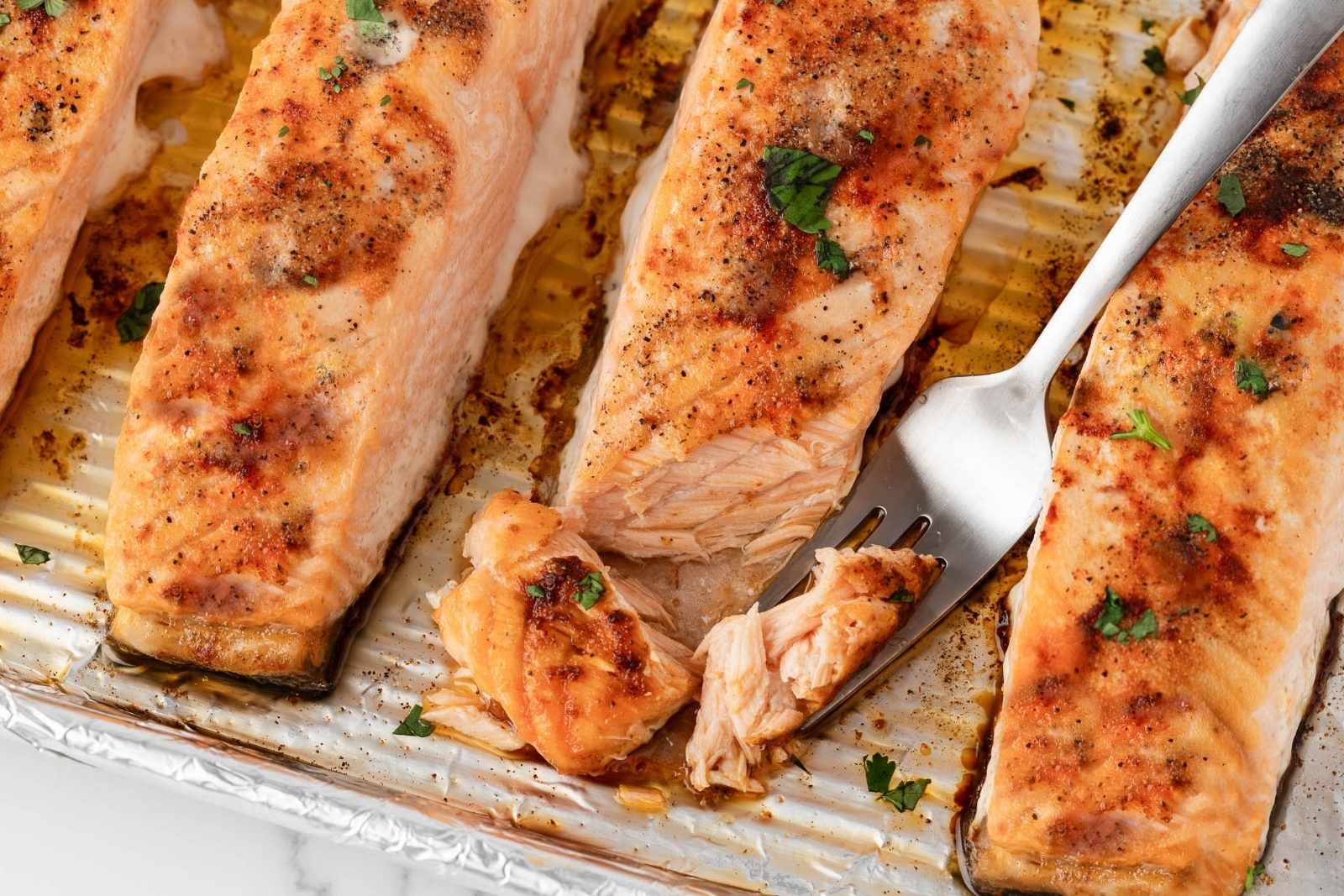
No time to thaw dinner? This baked frozen salmon comes out tender, flaky, and perfectly seasoned straight from the freezer. It's one of the easiest ways to get a healthy dinner on the table in under 30 minutes.
Can you Bake Frozen Salmon in the Oven?

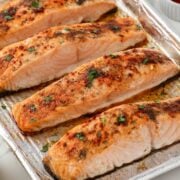
You know those nights when you forgot to take something out of the freezer or had no dinner plan at all? This baked frozen salmon recipe has saved me more times than I can count. It comes out tender, flaky, and perfectly seasoned every time, and if I bake an extra fillet or two, I turn the leftovers into my quick salmon pasta recipe the next night.
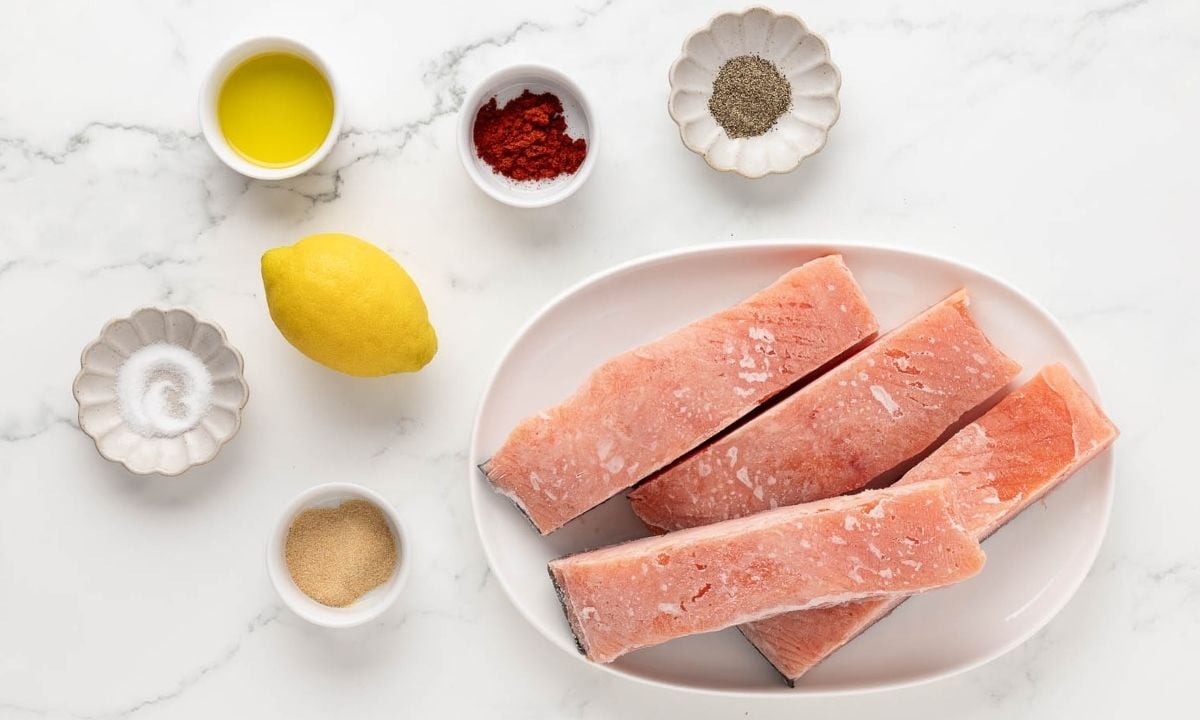
What You Need
You can bake frozen salmon with or without skin. The olive oil gives it a nice crust, and it’s seasoned with salt, pepper, garlic powder, and paprika. The lemon is optional but adds a lot of flavor at the very end.
How to Bake Frozen Salmon in the Oven
- Prep.
Preheat the oven to 425°F. Remove the salmon from the packaging and pat away any ice or moisture from the surface. - Season the salmon.
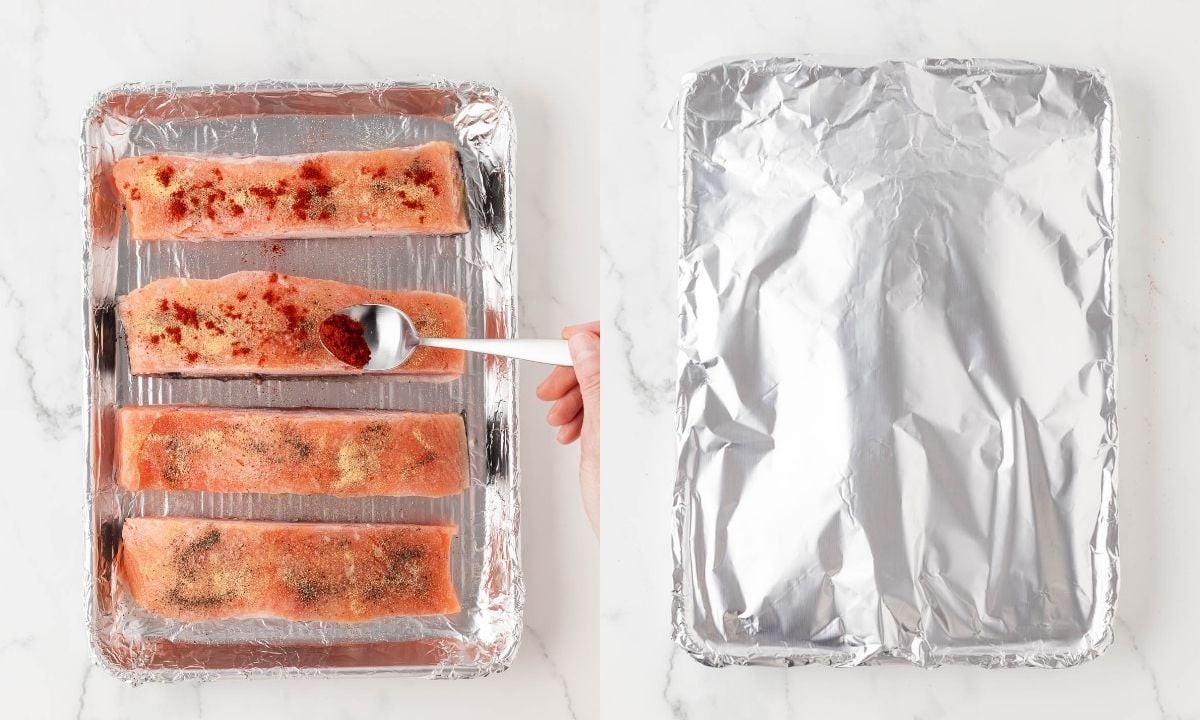
Place the salmon skin-side down (or flat-side down if it's skinless). Brush with olive oil, then generously sprinkle with the salmon seasoning.
- Cover and bake.
Cover the salmon with foil and bake it for 15 minutes. This helps keep the moisture in and lets the steam that builds up as it thaws do the cooking. Then remove the foil and finish cooking it uncovered to brown the tops for another 8 to 10 minutes, until it reaches 145F in the thickest part and flakes easily. - Serve.
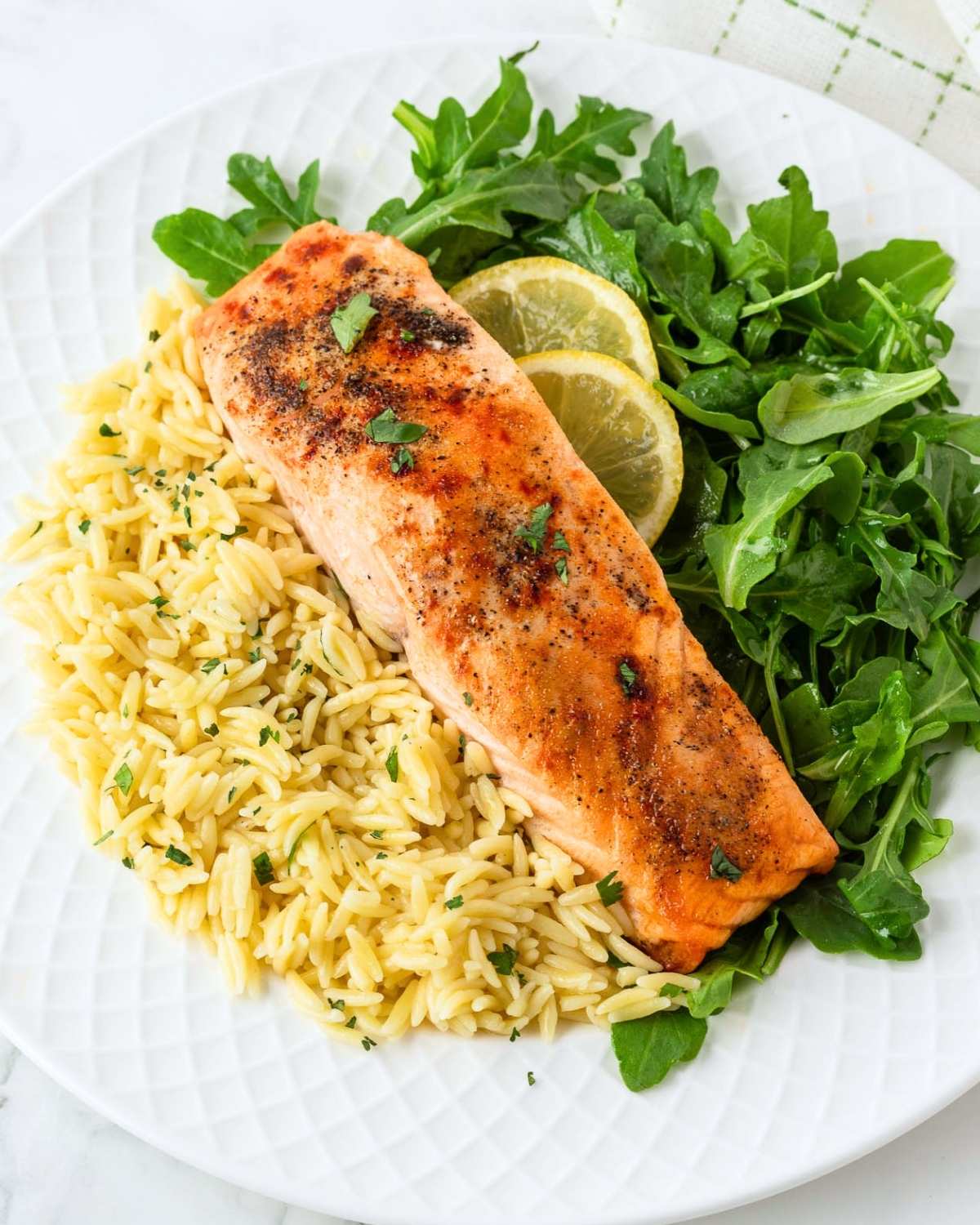
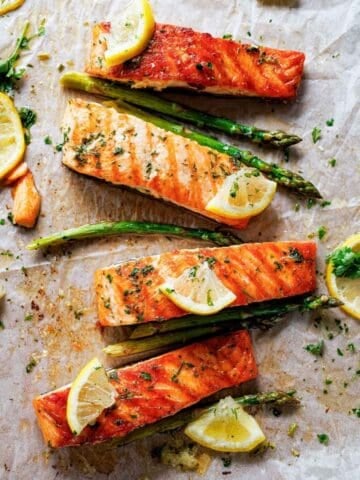
Finish with a squeeze of fresh lemon, if using, and serve immediately with your favorite sides such as a simple salad and rice.
What Temperature to Bake Frozen Salmon
Bake frozen salmon at 425°F for this recipe, but if you need to cook at a different oven temperature because you’re cooking something else at the same time, use the chart below as a guide and cook uncovered the last ⅓ of the total time.
Laura’s Tips for Baking Frozen Salmon
| Oven Temperature | Cooking Time |
|---|---|
| 400F | 25-30 min |
| 425F | 22-25 min |
| 450F | 18-22 min |
Cooking frozen salmon in the oven takes only about 5 to 10 minutes longer than usual; it depends on the thickness of the salmon fillet.
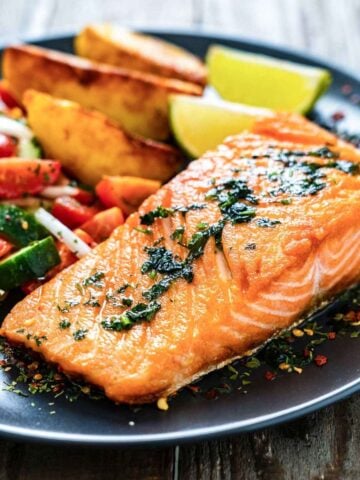
Visually, you’ll know the salmon is fully cooked when the flaky layers separate easily with a fork and the middle is a solid color (no longer looks wet). Using a meat thermometer, the internal temperature should read 145F at the thickest part of the salmon.
I know it’s hard to believe that baking frozen salmon has zero effect on the taste and texture of the finished product; that is, as long as you season your salmon well and take it out when it’s ready.
Yes. Quick-cooking vegetables like asparagus, zucchini, or green beans work best because they finish cooking around the same time as the salmon. If you're using potatoes or carrots, start them first since they need more time in the oven.
Frozen salmon naturally releases moisture as it bakes, so it's normal to see some liquid in the pan while it's covered. The foil traps that steam, helping the salmon thaw and cook gently at the same time. Once you uncover it, much of that moisture evaporates as the salmon finishes baking.
Yes. Brushing the salmon with a little olive oil before adding the seasoning helps it stick, even when the salmon is frozen. As the fish bakes, the seasonings meld into the surface, flavoring every bite.
Yes! Follow my air fryer frozen salmon recipe or the pan-cooked frozen salmon method to achieve great results.
Delicious Baked Salmon from Frozen!
Watch how it’s made:
Ingredients
- 4 frozen salmon fillets, with or without skin
- 2 teaspoons oil
- 1 teaspoon garlic powder
- 1 teaspoon paprika
- ½ teaspoon salt
- ½ teaspoon pepper
- 1 lemon, optional
Instructions
Prep:
- Preheat the oven to 425F with the top oven rack positioned in the middle of the oven. If you're baking skinless salmon, lightly grease the bottom of a baking dish with oil or spray.
- Remove the frozen salmon from the packaging and use a paper towel to pat it dry if necessary. If you left it on the counter for a bit and it's begun to thaw, you want to absorb that liquid.
Season the salmon:
- Place the salmon in the baking dish, skin-side down. If you have skinless salmon, the flat side goes at the bottom. Drizzle a little olive oil over the tops of the salmon and with a brush (or your fingertips) spread it over the top of each piece. This flavors the salmon and gives it a nice crust at the end. Sprinkle the seasonings over the top of the salmon pices.
- Cover the baking dish tightly with foil to trap the moisture while baking.
Bake:
- Bake the salmon covered for 15 minutes. Then, remove the foil cover and cook for another 8 to 10 minutes. Wild salmon and thinner salmon pieces should be done by now. Thicker salmon or farm-raised salmon will need a few extra minutes. You know the salmon is done when at the thickest part, the internal temperature taken with a meat thermometer registers 145F.
Serve:
- Remove the baking dish from the oven, squeeze the lemon over the tops of the salmon, and serve.
Notes
The recommendations below may include affiliate links.

Jo says
Salmon was DELICIOUS, even the crispy skin at the bottom! Best recipe for frozen salmon I’ve tried thus far.
Laura Fuentes says
Thank you coming back and sharing how much you enjoyed it!
Clarice says
You just gave me an idea for an easy dinner! I love that this recipe is both simple and healthy. It’s definitely a much better option than ordering fast food. Thanks for sharing the recipe. I can’t wait to give it a try!
Elizabeth F says
This salmon recipe was so good!
Amber Myers says
I will have to show this to my Mom. She loves salmon, and would probably enjoy this dish.