
This gluten-free, dairy-free chocolate cake is easy to make for a dessert everyone can enjoy. You’d never know it’s also egg-free, since it’s rich, chocolatey, and moist, with a crumbly texture that will win anyone over at first bite.
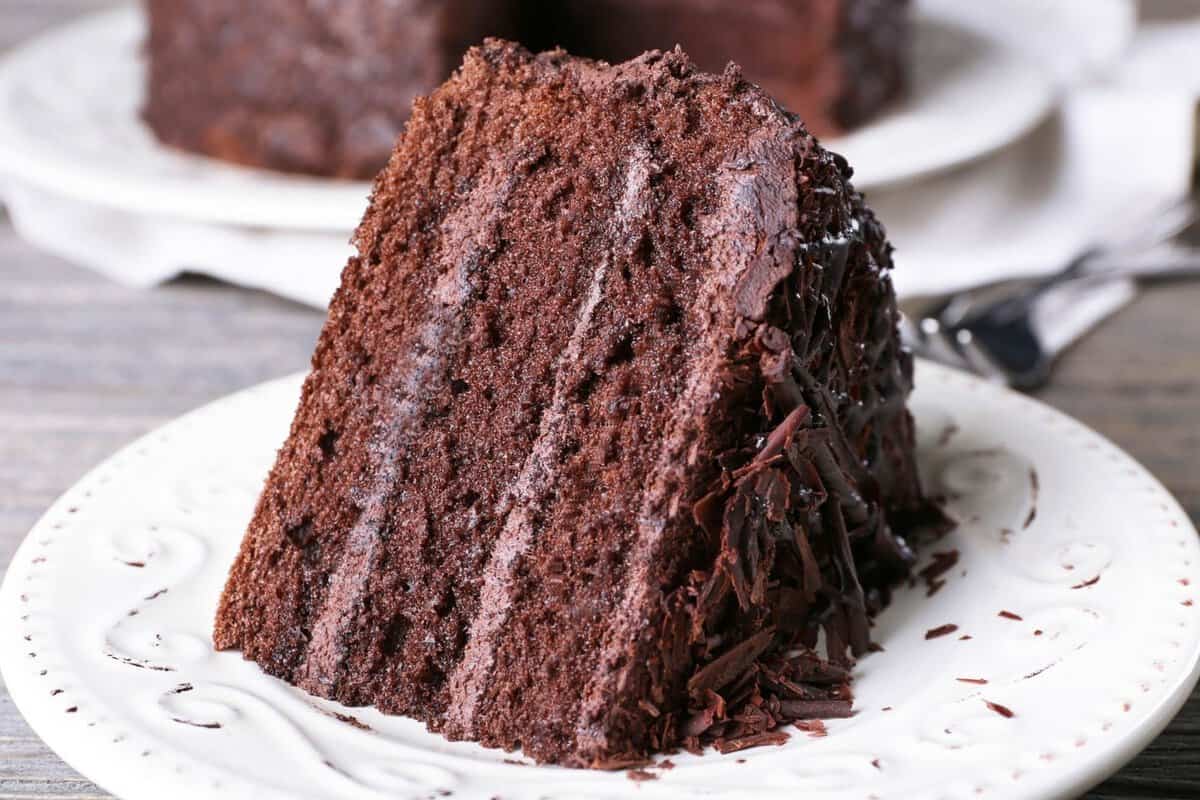
Chocolate Cake without Gluten, Dairy or Eggs

I first shared this recipe in 2014, after creating it for my middle son, who needed to follow a gluten-free diet, while my youngest couldn’t have dairy. I made it egg-free too because so many of my readers were looking for recipes without all three.
More than a decade later, this is still the chocolate cake I make for many of our family celebrations. I’ve baked it for birthdays, shared it with friends navigating food allergies, and made it enough times over the years to know that being gluten, dairy, and egg-free doesn’t have to mean settling for a disappointing cake.
Ingredients
There aren’t many ingredients in this cake, but each one has a job. Here’s why I use them, with more details and substitutions in the FAQs below.
- Gluten-free baking flour mix: I stand by the results I consistently get by using Bob’s Red Mill Gluten-Free 1:1 Baking Mix. This recipe will not work with almond or coconut flours.
- Sugar: Use traditional, granulated white sugar.
- Cocoa powder: Use unsweetened cocoa powder (nothing fancy) work best.
- Baking soda: This is what helps the cake rise.
- Salt: Brings out the flavors in the batter.
- Dairy-Free Chocolate Milk: Using already-mixed, dairy-free chocolate milk gives this cake a richer chocolate flavor.
- Vegetable oil: Use a neutral oil (canola or vegetable) to add moisture to this cake batter. Coconut oil works too, but it leaves a slight coconut taste behind.
- Vinegar: Use apple cider vinegar or plain white vinegar. It helps the cake rise when mixed with baking soda.
- Vanilla: A little to enhance the chocolate flavor; a must for cakes.
How to Make Gluten-Free Dairy-Free Chocolate Cake
- Prep
Preheat the oven to 350F and grease two 9-inch cake pans. - Make the batter
Whisk the dry ingredients in one bowl and the wet ingredients in another, then gently stir them together until the batter is smooth and no dry flour remains. Divide the batter evenly between the pans. - Bake
Bake for 25 to 30 minutes, checking around minute 25. They’re done when the centers are set and a toothpick inserted in the middle comes out clean. - Cool
Let the cakes cool in the pans for 10 minutes before transferring them to a wire rack. Let them cool completely before frosting, or the frosting will soften and slide. - Frost the cake
Make sure the frosting is soft enough to spread, especially if you refrigerated it. Frost the first layer, add the second cake layer, then cover the top and sides.
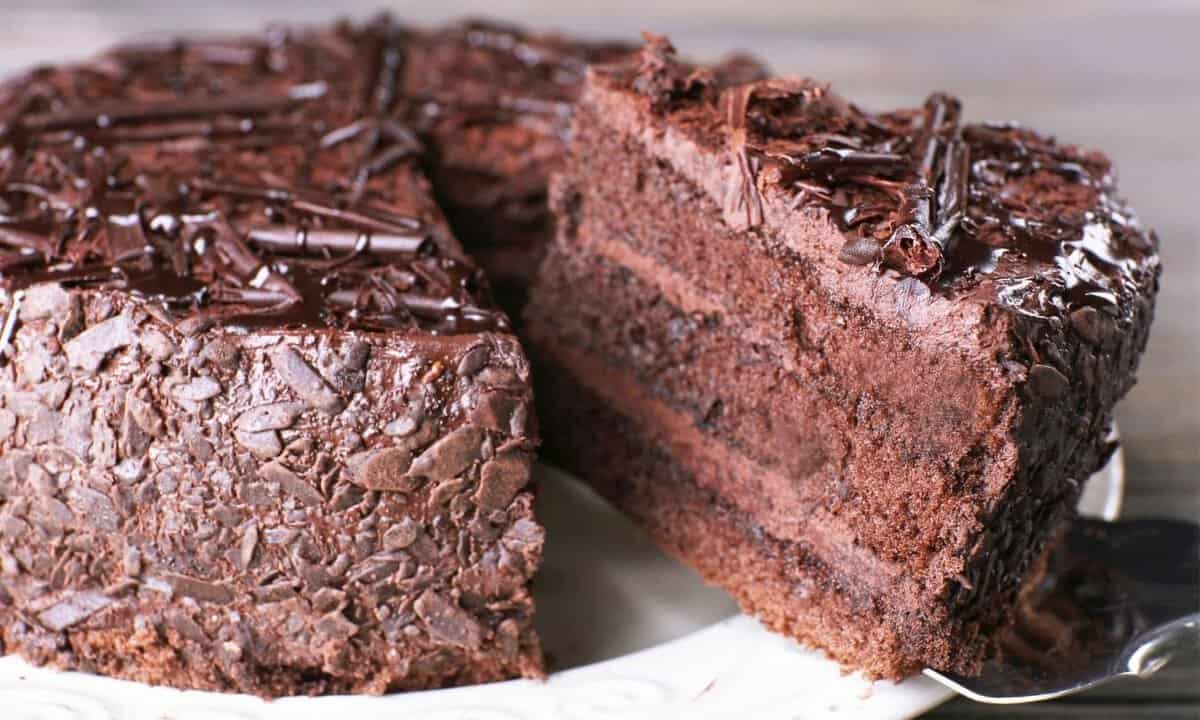
Dairy-Free Chocolate Frosting
If you’ve found a store-bought frosting that meets your ingredient needs, you’ll need one 16-ounce tub for this two-layer cake. Or, make my dairy-free chocolate frosting while the cake cools. It’s made with vegetable shortening, which yields a thick and easily spreadable frosting.
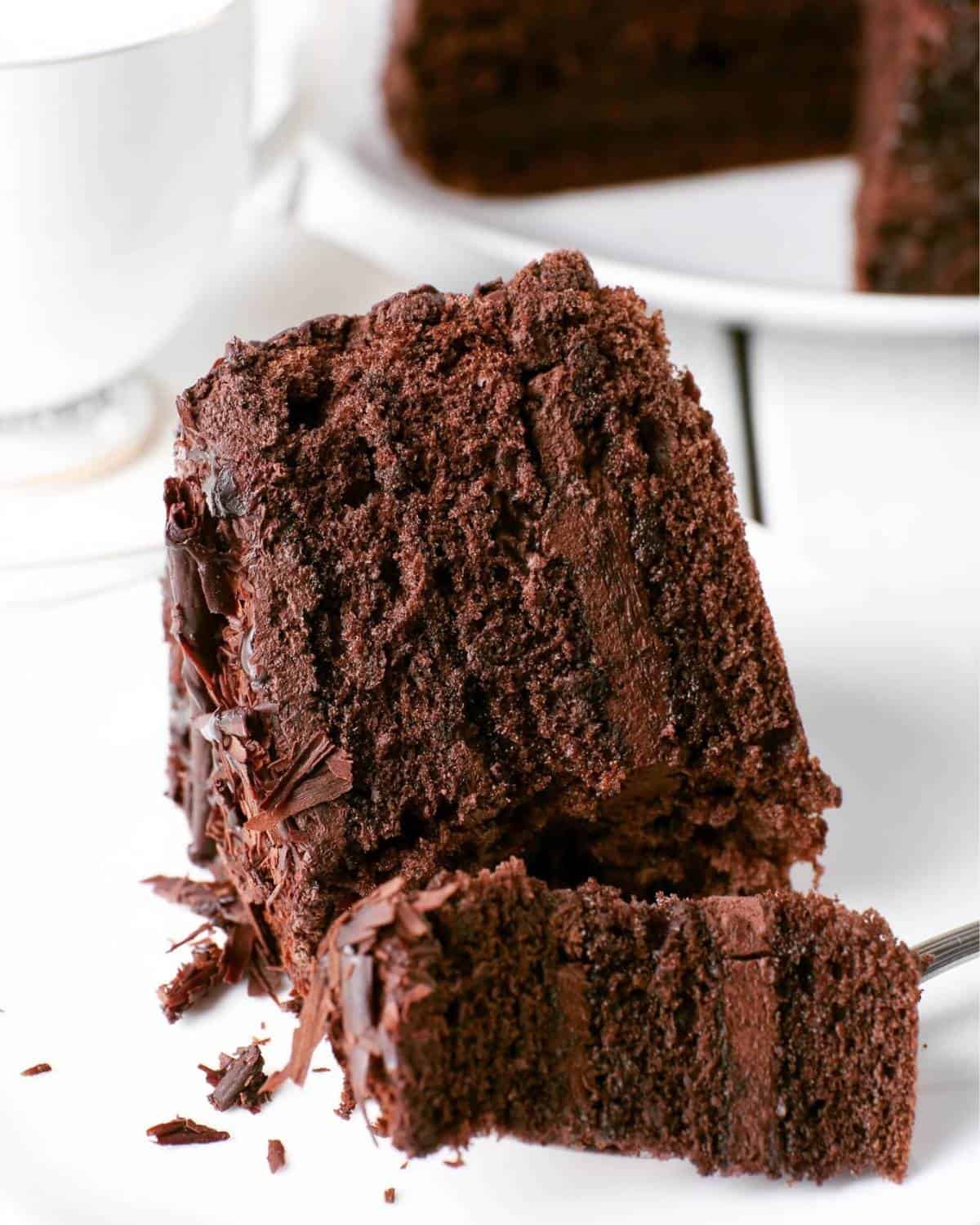
Laura’s Tips for The Best Gluten Free Dairy Free Cake
Yes. Don’t omit the vinegar. Apple cider vinegar or white vinegar both work; the acid reacts with the baking soda to help this egg-free cake rise. You’ll hear some fizzing when you combine the wet and dry ingredients, which means the reaction is working.
The chocolate milk gives the cake a richer, sweeter chocolate flavor. Almond, oat, or cashew-based chocolate milk all work. I’ve found that plain, unsweetened dairy-free milk makes the finished cake noticeably less sweet.
Don’t omit the sugar. If you want to replace the white sugar, many readers have successfully used coconut palm sugar. I’ve tested it once myself and found that the cake was less crumbly. Don’t use honey or liquid stevia; I haven’t personally tested xylitol or other granulated sugar alternatives.
After many tests, I stand behind Bob’s Red Mill 1:1 Gluten-Free Baking Flour and King Arthur Flour Gluten-Free Baking Mix for this cake. Both contain xanthan gum, which helps bind the egg-free batter together. You can find both at many local grocery stores or online (Amazon). You cannot use almond or coconut flour for this recipe.
Yes. For cupcakes, bake for 18 to 22 minutes and start checking them around minute 16. For a three-layer cake, divide the batter between three 6-inch pans. You can also bake it in a 9×13-inch pan, but keep an eye on the baking time since it will vary slightly. You’ll also find this information in the recipe card notes.
Yes. You can freeze the baked cake layers and thaw them the day you plan to frost the cake, or freeze the finished cake frosting and all. I’ve found that freezing and thawing doesn’t noticeably change the texture or flavor, which makes this a great cake to make ahead for a party.
More Gluten and Dairy Free Desserts
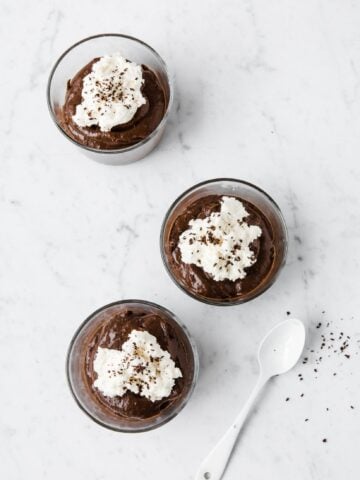
After you make this cake, try my healthy no-bake blondies, this avocado chocolate mousse, or a coconut almond flour chocolate cake. While not a dessert, these cassava flour pancakes are also worthy of a weekend breakfast celebration.
Gluten, Dairy, and Egg Free Chocolate Cake

Watch how it’s made:
Ingredients
- 3 cups gluten-free baking flour, tested with Bob's or King Arthur; see note for other options
- 1 ¾ cups granulated sugar
- 6 tablespoons unsweetened cocoa powder
- 2 teaspoons baking soda
- 1 teaspoon salt
- 2 cups chocolate non-dairy milk
- ½ cup vegetable oil
- 2 tablespoons apple cider vinegar, or white vinegar
- 1 teaspoon vanilla
- 1 batch dairy-free chocolate frosting
Instructions
Prep:
- Preheat the oven to 350F with the top rack positioned in the middle of the oven. Grease two (2) 9-inch cake pans with oil (or cooking spray) and set aside. You can also use parchment liners for the bottom, but I still recommend lightly greasing the sides.
Mix:
- In a large bowl, add the gluten-free flour, sugar, cocoa powder, baking soda, and salt. Whisk the dry ingredients well to ensure they're evenly mixed.
- In a separate bowl, whisk the dairy-free chocolate milk, oil, vinegar, and vanilla. Then pour the wet ingredients into the dry ingredients bowl and stir gently until the batter is smooth and all the flour is incorporated.
- Divide the batter evenly between the prepared cake pans.
Bake:
- Bake in a preheated oven for 25 to 30 minutes, until the centers are set and a toothpick inserted in the middle comes out clean. I check around minute 25, and if one pan is set but the other isn't, remove it and let the other finish baking for a couple of extra minutes.
- Remove the cake pans from the oven and let the cakes cool in the pans for 10 minutes, then transfer them to a wire rack to cool completely before frosting.
Frost:
- While the cakes are cooling, make the frosting. If you've made it ahead of time, take it out of the fridge and let it come to room temperature so it's easier to spread.
- Place one cake layer on a plate or cake stand and spread about a cup of frosting over the top. Add the second cake layer, then spread the remaining chocolate frosting over the top and sides.
Serve and store:
- Store the frosted cake, covered, at room temperature for up to 2 days or refrigerate for up to 5 days. Take it out of the fridge and let the cake come to room temperature before serving for the best texture.
Notes
- For a 3-tiered cake: You’ll need to fill three (3) 6-inch cake pans with batter.
- Cupcakes: Turn this into cupcakes by baking for 18 to 22 minutes, checking that a toothpick comes out clean around minute 16.
- 13 x 9-inch pan: You can use a rectangular pan for this cake recipe, but keep a close eye on the baking time, as it will vary by a few minutes from the original recipe.
- Using other gluten-free flour mixes: I recommend the two listed here because they include xanthan gum, an essential ingredient that binds and thickens the batter. If you’re using something else and it doesn’t include it in the ingredients, add 2 teaspoons of xanthan gum to the dry ingredients. This recipe only works with baking mixes, not with other alternatives (like almond or coconut flours).
The recommendations below may include affiliate links.



Chelsea says
Hi! I’m looking to make this for Christmas but wanted to make sure I’m reading it correctly. The recipe says to grease and bake in two cake pans but all of the photos have three layers. Is it two or should it be three? I want to make sure I do it right so I don’t have the baking times wrong with too thick or thin of layers. Thanks!
Laura says
Sorry for the confusion. As shown, with the measurements of the standard 8 or 9-inch round cake pans the recipe will yield 2. However, I used a smaller cake pan for the photos (it was all I had at the studio that day) and I needed to fill 3, 5.5-inch rounds. the photos are on my list to update, sorry about the confusion!
Chelsea says
No worries at all! I ended up watching the video too and saw it was just two so I figured that was the case. Thanks for the reply!
Cindy says
Made this on Saturday for a party on Sunday. Stored it covered in our garage overnight, mid 40’s temperature. Let it sit at room temperature for a few hours before serving. It was delicious! I noted that your video adds the dry to the wet ingredients but your recipe says the opposite…does it matter? My cake and frosting look darker than yours, not sure why. Thanks so much for sharing this fabulous cake!
Victoria O. says
Hi. My daughter-in-law is allergic to everything. This recipe would work if I an sub in a different vinegar as she is allergic to apples. Is the vinegar just there to react with the baking soda? Can I use unseasoned rice vinegar? Also, what GF flour blends work best with this? Thanks.
Laura says
You can absolutely use white vinegar for this. I linked the gluten-free all purpose flour blend throughout the post and in the recipe card. I hope you find it helpful!
Ashley Beard says
Hi, I made this cake exactly to the recipe, but the batter was so thick!! Almost more brownie like. Why would this happen? My only thought was that I used oat milk?
Laura Fuentes says
Oat milk can be a bit thicker and this is a thicker batter but it should not have turned out like brownies when you baked the cake.
Margie says
This is a great recipe I made cupcakes, it yeilded 16 cupcakes Other frosting was used but a very rich and dense chocolate cake!!
ria says
Is it 337 calories per serving??
Laura says
Yes
Kate Drennan says
Hi,
Does it matter if I use plain or self raising gf flour? Also is baking soda baking powder or bi carbonate of soda in the UK?
Many thanks,
Kate
Laura says
I advise using all-purpose flour since it contains no leavening agents. Bicarbonate of soda and baking soda are the same thing and can be used interchangeably, however, these are not the same as baking powder.