
If you struggle to get the results they're looking for when cooking white rice, this post shares how to prevent it from getting mushy and overcooking it, and shares my tips for success when cooking this pantry staple.
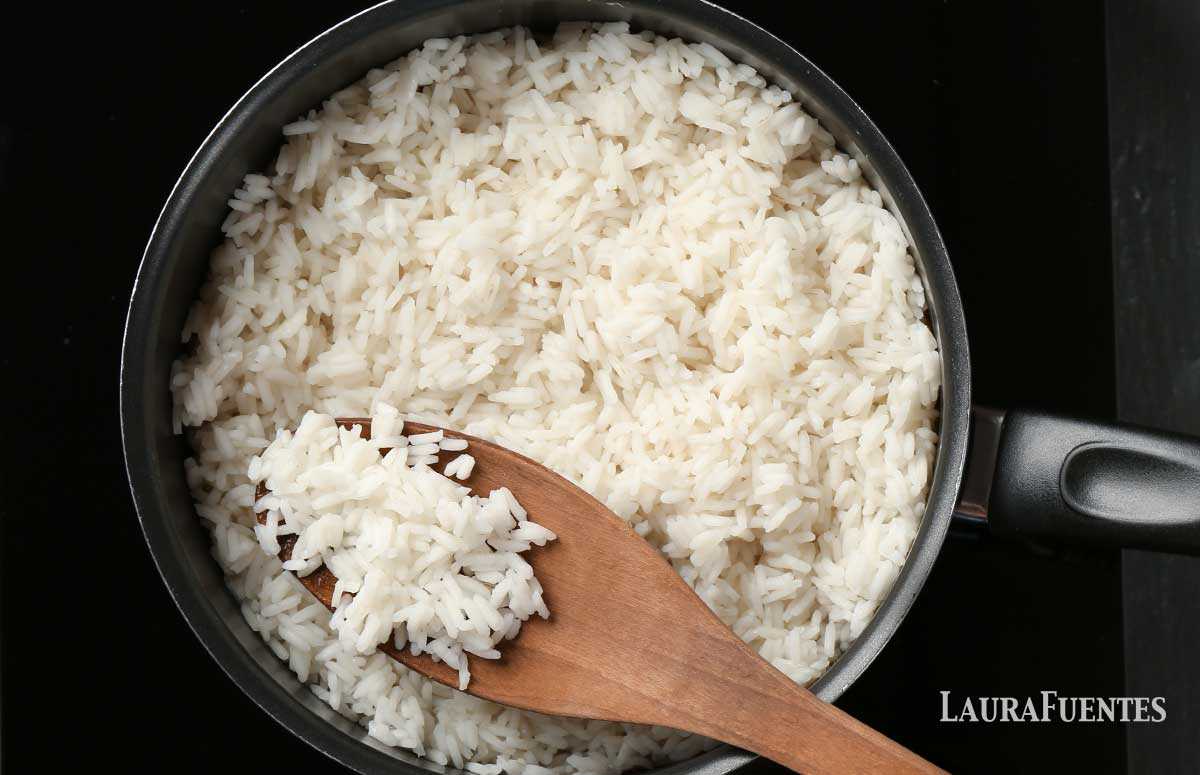
My family and I eat rice 2-3 times per week because it’s a quick and easy side dish for most dinner recipes. Typically, I cook long-grain white rice and this tutorial covers this grain specifically since it’s the most popular variety of rice in the US.
I’ve cooked rice in various methods, and this post covers cooking rice in a pot, in the microwave, in the slow cooker, and even in the instant pot. This does not cover instant rice or cooking rice in a rice cooker.
Do You Rinse Rice Before Cooking?
Regardless of the cooking method, rinsing rice is an optional step based on the rice texture you like and how you want to serve it. By rinsing the rice before cooking, you’ll remove some of the natural starch content of the rice; so given that you measure the rice and water correctly, the outcome is rice that tends to be less sticky. Make sure to read the troubleshooting section since this is different than mushy rice.
How to Cook Rice on the Stove
Cooking white rice on the stove is my go-to method because it’s a great way to control the texture and taste –Especially since my son’s go-to side is cilantro lime rice– and most significantly, it’s ready in 20 minutes. Here is how I cook long-grain white rice:
- Measure
Measure the rice, level it off in your measuring cup, and measure the water. I use the classic 1-part rice to 2-part water ratio. - Rinsing is optional
Rinsing the rice removes excess starch at the beginning, which helps yield grains that separate easily. You can skip this step and fluff the rice with a fork when it’s done cooking, then remove the lid to evaporate this moisture. This is based on your preference. - Cook
Put the rice and the water in the pot. Add salt-½ teaspoon per cup is what I use-and stir. Bring it to a boil, uncovered. Give it a stir, reduce the heat to the lowest setting, cover with a tight-fitting lid, and cook the rice for about 18 minutes. The package says 20, but the recipe technically begins to soften when the water starts to get hot, so I cook it a little less. - Remove from heat
After 18 minutes, I turn off the heat and move the pot to another burner-one that isn’t hot. I let it rest for a few minutes; and if the rice looks very moist, I place a kitchen towel on top of the pot and cover it to absorb excess moisture. - Fluff
Use a fork to fluff the rice, and keep it uncovered for a couple of minutes before serving so any excess steam can evaporate.
Watch this quick video where I share the visuals of these cooking steps and tips.
White Rice to Water Ratio on the Stove
Most of the time, I don’t rinse my long-grain white rice before cooking it on the stove because that removes some of the starch from the rice and that means that I need to adjust the amount of water a little. The traditional rice-to-water ratio for cooking rice on the stove is 1 part rice to 2 parts water. To cook 1 cup of rice, you will need 2 cups of water.
| Servings | Rice | Water |
|---|---|---|
| 2-3 | 1 cup | 2 cups |
| 4-5 | 2 cups | 4 cups |
| 6-7 | 3 cups | 6 cups |
How to Simmer Rice
When the water and the rice come to a boil, you’ll see large bubbles in the pot. At this point, you’ll reduce the heat and cover it with a lid. Shortly thereafter, the bubbles will be small or you’ll see wave-like movement in the water; this is simmering. Low heat, low activity of the liquid. This is good! This means that the rice is cooking as it should-until it’s done, for about 18 minutes.
Do you cook rice covered or uncovered?
First, you’ll bring the rice and water to boil uncovered. Then, you’ll reduce the heat and cook the rice covered over low heat. It’s also important to keep the lid on while cooking and not stir the rice. Wait until the end, when it’s time to fluff it with a fork.
Rice Cooking Tips
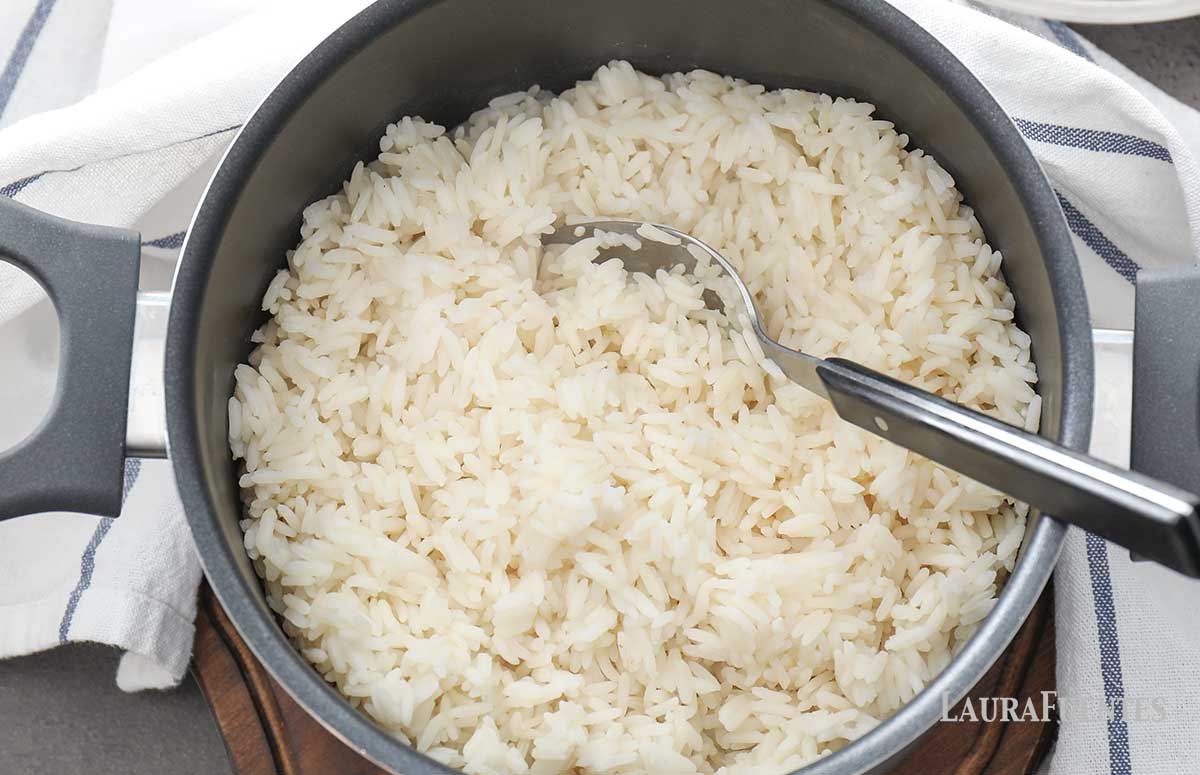
Whichever is your choice method, here are a few more tips to keep the rice nice and tender.
- Know Your Rice Types: when in doubt, refer to the package directions for measurements. Medium grain and other varieties, such as Basmati and Jasmine have different ratios.
- Boil uncovered: It doesn’t take long to bring the water and rice to a boil, which starts the cooking time. With the lid off, you can clearly see when the water comes to a boil.
- Cover to simmer: after you reduce the heat, put the lid on, and cook the rice covered. Make sure the lid fits tightly and traps the steam inside.
- Rinsing is optional: rinsing the rice reduces the amount of starch on each grain and can help prevent clumping. If you reduce the rice, remove 1 tablespoon of water per cup of rice.
- Add flavor: I recommend adding ¼ to ½ teaspoon of salt per cup of uncooked rice to the water. You can also add chicken broth or stock for extra flavor.
These tips apply to grain rice, they do not apply to cauliflower rice. Follow one of these cauliflower rice recipes to make your low-carb dish delicious.
How to Cook Rice in the Microwave
When we remodeled our kitchen, we spent a couple of months cooking out of the garage and using the microwave in all sorts of unconventional ways; and cooking rice was one of them. As it turns out, you can cook rice in the microwave and the outcome is quite good. Here is how:
- Measure the rice and water
Place 1 cup of rice and 2 cups of water in a microwave-safe dish. I use a square 9×9 baking dish with sides. - Microwave
Microwave the rice and water, uncovered, for 10 minutes on high. This is based on a 900w or higher microwave. Check the rice and stir with a fork. By now, most of the water should have disappeared. Continue cooking in 1-minute increments until the water is nearly gone, and you see bubbles have formed around the rice. - Cover
Cover the rice and dish with plastic wrap, or a lid if your microwave-safe container has one, and cook for another 3 minutes. - Rest
After 15 minutes of microwaving, the rice should be mostly tender, and the water should be gone. If it’s still a bit crunchy, microwave it, covered, for 1 to 2 minutes. Keep it covered for another 5 minutes, and fluff it with a fork.
Water to Rice Ratio in the Microwave
The microwave is perfect for cooking smaller portions of rice, anywhere between ½ cup to 1 ½ cups of rice. The water-to-rice ratio is 1 part water and 2 parts rice. Here is a helpful table that shows you quantities of each:
| Servings | Rice | Water |
|---|---|---|
| 1 | ½ cup | 1 cup |
| 2-3 | 1 cup | 2 cups |
| 3-4 | 1 ½ cups | 3 cups |
The key to cooking rice in the microwave is to use a microwave-safe dish, such as baking dishes or large Pyrex measuring cups that can withstand heat. You also want room for the water to bubble without going over. The more rice you cook, the larger the dish.
How to Cook Rice in a Crock-Pot?
While I usually add rice to my slow cooker recipes in the last 30 minutes of cooking as part of a recipe, when we were remodeling our kitchen, I also found myself using the crockpot to cook rice. Here are the steps for cooking the rice in the crockpot by itself and some tips to ensure success:
- Grease the crockpot
Grease the bottom of the slow cooker with butter or oil or generously spray it with non-stick spray. Skipping this step will cause the rice to stick. - Measure
Add 2 cups of rice, ¼ teaspoon salt, and 4 cups of water to the bottom of the dish. Lightly stir. - Cover and cook
Cover with a lid and cook on high for 2 to 2 ½ hours, depending on the amount of rice you’re cooking, or until the liquid is absorbed and the rice is tender. - Fluff and serve
Uncover, fluff with a fork, and serve.
Water to Rice Ratio in the Slow Cooker
I recommend cooking no less than 1 ½ cups of rice in a 5-quart or larger slow cooker. The less rice you add, the less liquid; therefore, there is a chance the water won’t cover all the rice. The water-to-rice ratio in the slow cooker is 1 part rice to 2 parts water. Here is a helpful chart showing you how much of each:
| Servings | Rice | Water |
|---|---|---|
| 3-4 | 1 ½ cups | 3 cups |
| 4-5 | 2 cups | 4 cups |
| 6 | 2 ½ cups | 5 cups |
| ⅞ | 3 cups | 6 cups |
How to Cook Rice in the Instant Pot
Growing up in Spain, we used a classic pressure cooker to cook everything from beans to rice. Nowadays, many people use the electric version of the pressure cooker, often called InstantPot, because of the brand that popularized it in the US, to cook many of their meals -rice included.
Because foods are cooked under pressure, there are some tweaks to the ratio of rice to water, which are covered in the section below. But first, here are the steps and tips that make cooking rice in the InstantPot easy:
- Measure
Measure 1 part rice and 1 part water and add them to the pressure cooker. Rinsing the rice is optional. Season with ¼ teaspoon per 1 cup rice and give it a stir. - Cook
Close the lid and seal the valve. Cook on HIGH for 3 minutes, then a natural release for 10 minutes. - Fluff and Serve
Open the venting knob to release any remaining pressure inside. Open the lid, fluff the rice, and serve.
Water to Rice Ratio in the Instant Pot
The most noticeable difference, and something I had to pay attention to myself, is that the water to rice ratio when cooking rice in the Instant Pot is different than in any other method. Since the rice is cooked inside a pressurized environment and in less time, it also requires less liquid. The water-to-rice ratio is 1 part water to 1 part rice; in other words, it’s a 1:1 ratio. Here is a helpful chart illustrating amounts:
| Servings | Rice | Water |
|---|---|---|
| 2-3 | 1 cup | 1 cup |
| 4-5 | 2 cups | 2 cups |
| 6-8 | 3 cups | 3 cups |
How to Store Cooked Rice
What I love about cooking more rice than I need for one meal is being able to store leftover rice in an airtight container in the refrigerator for up to 5 days. The trick to reheating leftover rice is to distribute a couple of tablespoons of water to the rice to bring moisture back in and give it a soft texture.
Tips and Tricks for Achieving Perfect Rice
Regardless of the method you choose to cook rice, there are some tell-tale signs that the rice needs a bit more water, more cooking time, or both. Here are some ways to troubleshoot:
The rice is too watery: if the rice is soft and tender, this means you added too much water to the pot. Try draining the water out in a colander. If the rice is still a little hard, it needs more cooking time.
The rice is hard: this usually means that it needs more cooking time. If all the water is gone from the pot and the rice is still hard, this means you did not add enough water. Add 2 to 3 tablespoons of water and continue cooking it covered for a few more minutes.
The rice is burnt: this happens when the heat source is too hot. After the water comes to a boil, reduce the heat to the lowest setting. If your burner is large, move the pot to a small burner. Rice needs constant low heat, not necessarily a big source. When serving it, carefully scoop the rice out, leaving the burnt layer at the bottom of the pot. Soak the pot in warm water to make it easier to clean.
The rice is mushy and sticky and the rice is soft: this means you added too much water to the pot at the beginning. Make sure to measure carefully next time. To salvage the rice, drain it through a colander and let some of the moisture steam out.
How to Make Perfect Rice (Stovetop)

Watch how it’s made:
Ingredients
- 1 cup long-grain white rice
- 2 cups water or broth
- ½ teaspoon salt*, optional
Instructions
Measure
- Measure the rice, level it off in your measuring cup, and measure the water. I use the classic 1-part rice to 2-part water ratio.
- Rinsing is optional and some people prefer it because it removes some of the starch from the rice. For optimal results, rinse the rice under cold water and subtract 1 tablespoon of water per cup of rice. You can skip this step and when the rice is done cooking and you've fluffed it, remove the lid and let some of the excess moisture evaporate (this is what I personally do).
Cook the rice
- Put the rice, water, and salt, in a pot. Use one that has a tight-fitting lid. Bring it to a boil, uncovered. Give it a stir, reduce the heat to the lowest setting, and cover. Cook the rice for about 18 minutes. The package says 20, but the recipe technically begins to soften when the water starts to get hot, so I recommend a couple of minutes less.
Remove from heat
- After 18 minutes, turn off the heat and move the pot to another burner-one that isn't hot. Let it rest for a couple of minutes before fluffing it with a fork. Keep it uncovered, after fluffing, for a couple of minutes before serving so any excess steam can evaporate.
Notes
The recommendations below may include affiliate links.




April says
This is so helpful! I always struggle with making rice on the stove and it always comes out soggy! Looking forward to giving this a try!!
TAYLER ROSS says
I used this recipe to make rice for dinner last night and it came out perfectly! Definitely bookmarking!
Holley says
I always struggle to get my water ratio right and this was sooooo helpful! Thanks so much for sharing!
Justine says
I always have trouble getting my rice perfect, so this is great info! Thanks!
Amber says
Do you add the rice to already boiling water, or do you mix the rice and water together to come to a boil?
Laura Fuentes says
It will depend on the type of rice you are cooking. I add mine with the cold water at the same time.